Crown reduction is the selective removal of branches from the outer perimeter of a tree's canopy to reduce its overall height and spread, retaining the main framework and natural shape. Crown lifting is the removal of the lowest branches to increase vertical clearance beneath the tree without altering its height or overall canopy size. Both techniques are governed by BS3998:2010, the British Standard for tree work, which sets maximum thresholds: crown lifting should not exceed 15% of live crown height, and crown reduction cuts must retain at least one-third of the parent limb diameter at the point of cut.
Key Takeaways
- Crown reduction tackles overall tree size (height and spread)—typically removing branches to reduce mechanical stress or fit the tree within its available space. Cuts must not exceed 100mm diameter per BS3998:2010.
- Crown lifting removes only lower branches to create clearance for pedestrians, vehicles, or structures. It retains at least two-thirds of the tree's total height and removes no more than 15% of live crown height in a single session.
- The two techniques solve different problems: reduction addresses overcrowding and storm-damage risk, while lifting addresses ground-level obstruction without reducing canopy density.
- Improper crown reduction—particularly removing more than 25% of the canopy or making flush cuts—exposes trees to decay, disease, and structural failure. Lifting, when done correctly, carries minimal long-term impact on tree health.
- In the UK, crown reduction of protected trees (subject to Tree Preservation Orders or within Conservation Areas) requires planning permission. Crown lifting of branches under 75mm diameter is often exempt, though local authority rules vary.
Why Do Trees Need Crown Work and What Problems Are You Actually Trying to Solve?
Tree overgrowth creates three primary categories of problem: safety hazards, legal liability, and aesthetic or functional conflicts. Branches overhanging power lines, structures, highways, or neighbouring properties pose physical risk and potential legal claims under nuisance law. In 2025, UK insurers reported that storm-damaged trees accounted for 18% of domestic property claims, with failure to maintain canopies cited in 34% of those cases—meaning poor crown work (or no work at all) can affect your insurance claim if a branch causes damage.
Structural health issues also matter. Overextended limbs, wind-sail effect in exposed locations, or dieback in the upper canopy all require intervention to prevent collapse. Mature trees that have outgrown their space often develop unbalanced canopies, creating mechanical stress at union points where branches meet the trunk. Crown work becomes necessary when the tree's natural growth conflicts with its environment or when decay, disease, or storm damage compromise structural integrity.
Aesthetic concerns—excessive shading of lawns, loss of light to windows, obstruction of sight lines at road junctions—also justify crown work, though these must be balanced against the tree's long-term health. BS3998:2010 requires that all pruning be justified (clear objective), minimal (only necessary), and appropriate for the species, size, and condition of the tree.
What is crown reduction used for?
Crown reduction is specified when the tree's overall size exceeds the space available, when the canopy creates excessive wind resistance (increasing storm-damage risk), or when upper branches are structurally unsound. Reduction is the preferred technique for managing mature trees near buildings, preventing future damage from limb failure, and adapting trees to changed site conditions such as adjacent construction.
What is crown lifting used for?
Crown lifting addresses ground-level clearance: removing lower branches to enable vehicle or pedestrian access, improve visibility at junctions, or allow light to reach grass and understory planting. Lifting is commonly specified for street trees (to maintain 5.2m clearance over highways or 2.5m over footpaths), parkland trees (to create usable space beneath the canopy), and garden trees shading patios or driveways.
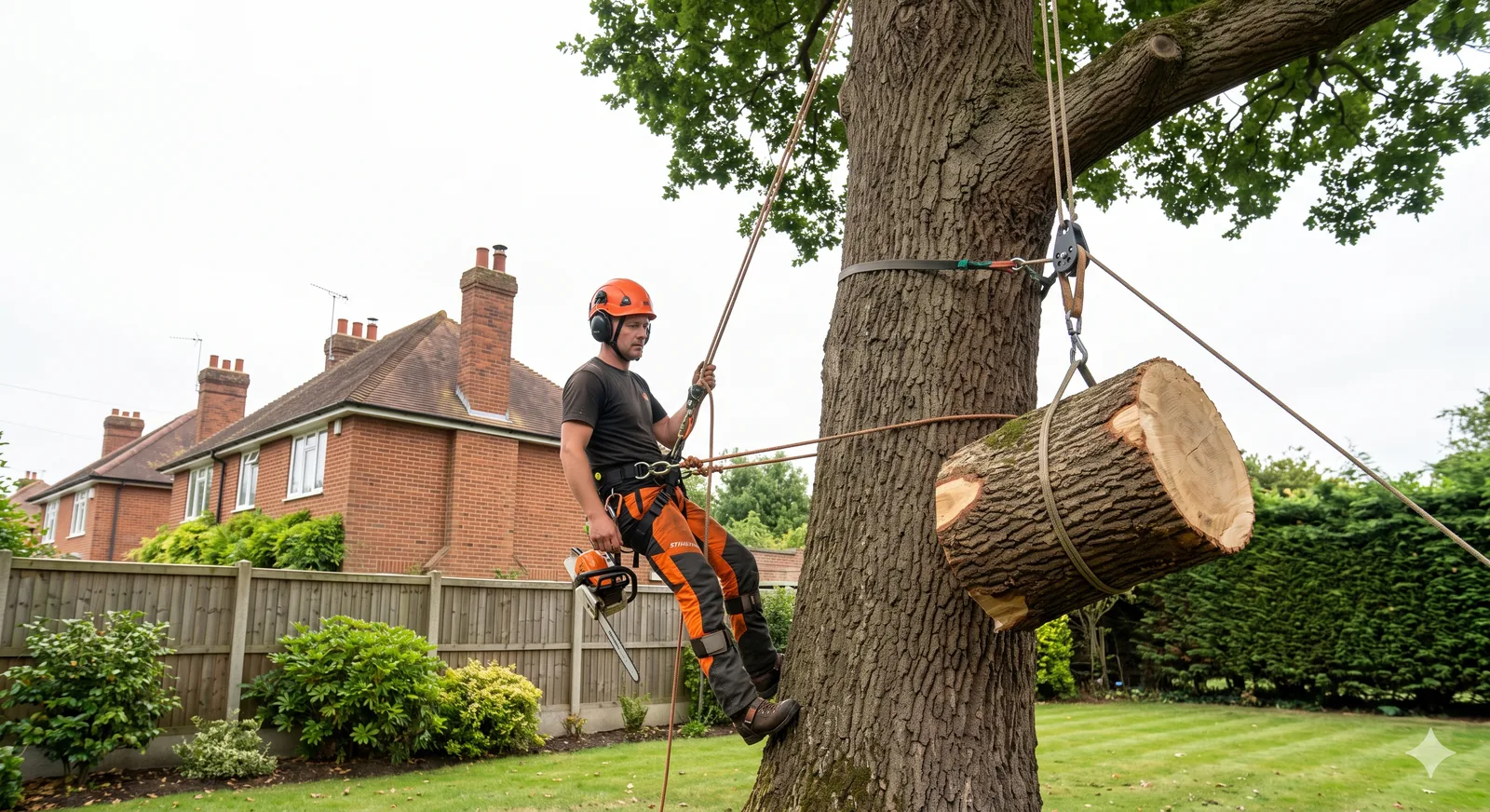
Crown Reduction Explained—When You Need to Make Your Tree Smaller Overall
Crown reduction removes entire branches from the outer edge of the canopy, cutting back to a suitable lateral branch or growth point. The technique reduces both height and spread uniformly, maintaining the tree's natural silhouette and framework. Reduction differs fundamentally from topping (also called "lopping"), which makes indiscriminate cuts into bare wood and destroys the tree's structure. Topping leaves large wounds that cannot compartmentalise, inviting decay and epicormic growth—weak shoots from dormant buds that weakens the tree further.
Best practice per BS3998:2010 requires cuts to lateral branches at least one-third the diameter of the parent limb. Specifications must state actual measurements—such as "reduce height by 2.0 metres and lateral spread by 1.0 metre"—rather than vague percentages. Reduction works best for mature broadleaf species (oak, ash, beech, lime) and should be avoided on conifers, which rarely regrow from old wood.
You might need reduction if your tree has outgrown its space, if storm damage has reshaped the upper canopy, or if you live in an exposed location where reducing the "sail" area lowers wind load. The technique also manages weight distribution: removing overextended limbs reduces leverage at branch unions, lowering the risk of failure during high winds.
How much can you reduce a tree's crown?
BS3998:2010 advises that crown reduction should retain the tree's natural shape and not exceed removal of 30% of the canopy in a single session. Cuts exceeding 100mm diameter significantly increase decay risk and should be avoided unless the tree is structurally unsound. For mature trees, a reduction of 1.5–2.5 metres in height and spread is typical; larger reductions require multiple sessions spaced over 3–5 years to allow the tree to compartmentalise wounds and redirect growth.
Crown Lifting Explained—When You Need to Remove Lower Branches for Clearance
Crown lifting removes the lowest branches (or prepares them for future removal) to increase vertical clearance without changing the tree's overall height or canopy density. The technique is specified when the problem is ground-level obstruction, not overall size. Lifting is less stressful than reduction: removing lower branches mimics natural shedding as trees mature and allows the tree to focus resources on the upper canopy.
Best practice per BS3998:2010 restricts lifting to less than 15% of live crown height and requires retention of at least two-thirds of the tree's total height as live crown. For a 12-metre oak, this means lifting the canopy to a maximum of 4 metres above ground level. Excessive lifting in a single session removes too much photosynthetic capacity, weakening the tree and increasing susceptibility to disease.
Lifting is most commonly specified for street trees (to meet highway clearance requirements), garden trees obstructing paths or driveways, and parkland trees where access beneath the canopy is required. The technique also improves sight lines at road junctions, reduces shading of grass or borders, and creates space for outdoor furniture or play equipment.
What is the purpose of crown lifting?
The purpose of crown lifting is to create vertical clearance beneath the canopy while preserving the tree's overall size, shape, and canopy density. Lifting is specified when the tree's height and spread are acceptable but lower branches obstruct use of the space below. The technique is particularly effective for species that naturally shed lower branches as they mature, such as oak, ash, and lime.
Key Differences Between Crown Reduction and Crown Lifting—What Makes Them Fundamentally Different
The two techniques differ in location of cuts, effect on tree shape, stress imposed, and typical cost. Crown reduction cuts are made at the outer edge of the canopy, reducing the tree's silhouette and creating a smaller, more compact form. Crown lifting cuts are made at the base of the canopy, removing lower branches while retaining the tree's height and upper structure.
Reduction changes the tree's overall shape and requires careful selection of cut points to maintain natural branching structure. Lifting does not alter the tree's profile when viewed from a distance; it simply raises the base of the canopy. Reduction is more stressful for mature trees because it removes significant photosynthetic area and creates larger wounds. Lifting, when restricted to 15% of crown height, has minimal impact on tree vigour.
| Factor | Crown Reduction | Crown Lifting |
|---|---|---|
| Location of cuts | Outer perimeter of canopy (top and sides) | Lower branches only (base of canopy) |
| Effect on tree height | Reduces height by specified amount (e.g., 2m) | No change—height remains the same |
| Effect on spread | Reduces lateral spread uniformly | No change—spread remains the same |
| Canopy density | Reduces overall leaf area and density | Retains upper canopy density; opens interior |
| Typical stress level | Moderate to high (especially if >25% removed) | Low to moderate (if ≤15% crown height) |
| Best season (UK) | Late winter to early spring (dormant season) | Year-round for most species; avoid spring for cherries |
| Planning permission (TPO trees) | Required for most reduction work | Often exempt if branches <75mm diameter; check local rules |
| Typical cost (15m mature tree) | £600–£1,400 (depends on access, waste disposal) | £350–£800 (fewer branches, less waste) |
Cost implications depend on tree size, density, access, and waste disposal. Lifting typically costs less than reduction because fewer branches are removed and less waste is generated. A 12-metre oak requiring lifting to 3 metres might cost £400–£700, while reducing the same tree's height by 2 metres could cost £800–£1,200. What drives the cost up: poor access (requiring a larger vehicle or hand-carrying of waste), proximity to structures (requiring rigging), and disposal of timber (larger-diameter limbs from reduction work).
When should you do crown reduction vs crown lifting?
Crown reduction solves an obvious problem: the tree is too big. Branches hanging over your neighbour's fence. Shade creeping across your garden. The whole thing outgrowing its space. Crown lifting is different—it's about ground-level access. Low branches forcing you to duck on the garden path. Vehicles clipping branches on the drive. Grass struggling to survive in permanent shade beneath the canopy.
If you're facing both problems, you can specify both: "reduce height by 1.5m and lift crown to 3.0m above ground level." For mature trees, though, this means two separate sessions spaced a year or more apart. One operation at a time lets the tree recover without spiralling into stress.
Health and Safety Considerations—Why Technique Matters for Your Tree's Survival
Crown reduction is hard on a tree. Lifting is not. The difference comes down to how much you're taking away and how many wounds you're creating.
When you reduce a crown, you're removing a large proportion of the canopy at once. Trees defend themselves against decay by forming chemical and physical barriers around wounds—a process called compartmentalisation. Cut into branches thicker than 100mm, or remove more than 25% of the canopy, and you overwhelm this defence. What follows is heart rot, structural weakness, and years shaved off the tree's life.
The way you make cuts determines everything. Heading cuts—cutting back to a stub with no side branch—leave dead stubs that rot inward, opening the door to fungi. Flush cuts, made right into the branch collar, destroy the zone of specialised cells that seals the wound. BS3998:2010 requires cuts just outside the branch collar, leaving it intact. This one detail separates good pruning from permanent damage.
Crown lifting, by contrast, has almost no impact on tree health when you remove no more than 15% of crown height and make proper cuts. Lower branches naturally die as the upper canopy shades them out—a process called cladoptosis. Lifting simply accelerates something that would happen anyway. These branches are small (usually under 75mm diameter), the wounds close easily, and the tree barely notices the loss.
Research by the UK Forestry Commission in 2024 found that trees subjected to crown reduction exceeding 30% of canopy volume showed a 42% increase in dieback within three years, compared to 8% for trees with lifting-only work.
Does crown reduction hurt trees?
Properly executed, crown reduction sits within what most mature broadleaf trees can tolerate. Remove no more than 25% of the canopy. Cut to suitable lateral branches. Avoid flush cuts. Under these conditions, the tree redirects growth to the remaining laterals and seals wounds within one or two growing seasons.
Reduction becomes harmful when it crosses into excess: removing more than 30% of the canopy, making cuts over 100mm diameter, or repeating the work too soon (within three years). Species matter too. Oak and lime bounce back well. Cherry and birch tend toward dieback and are better left alone.
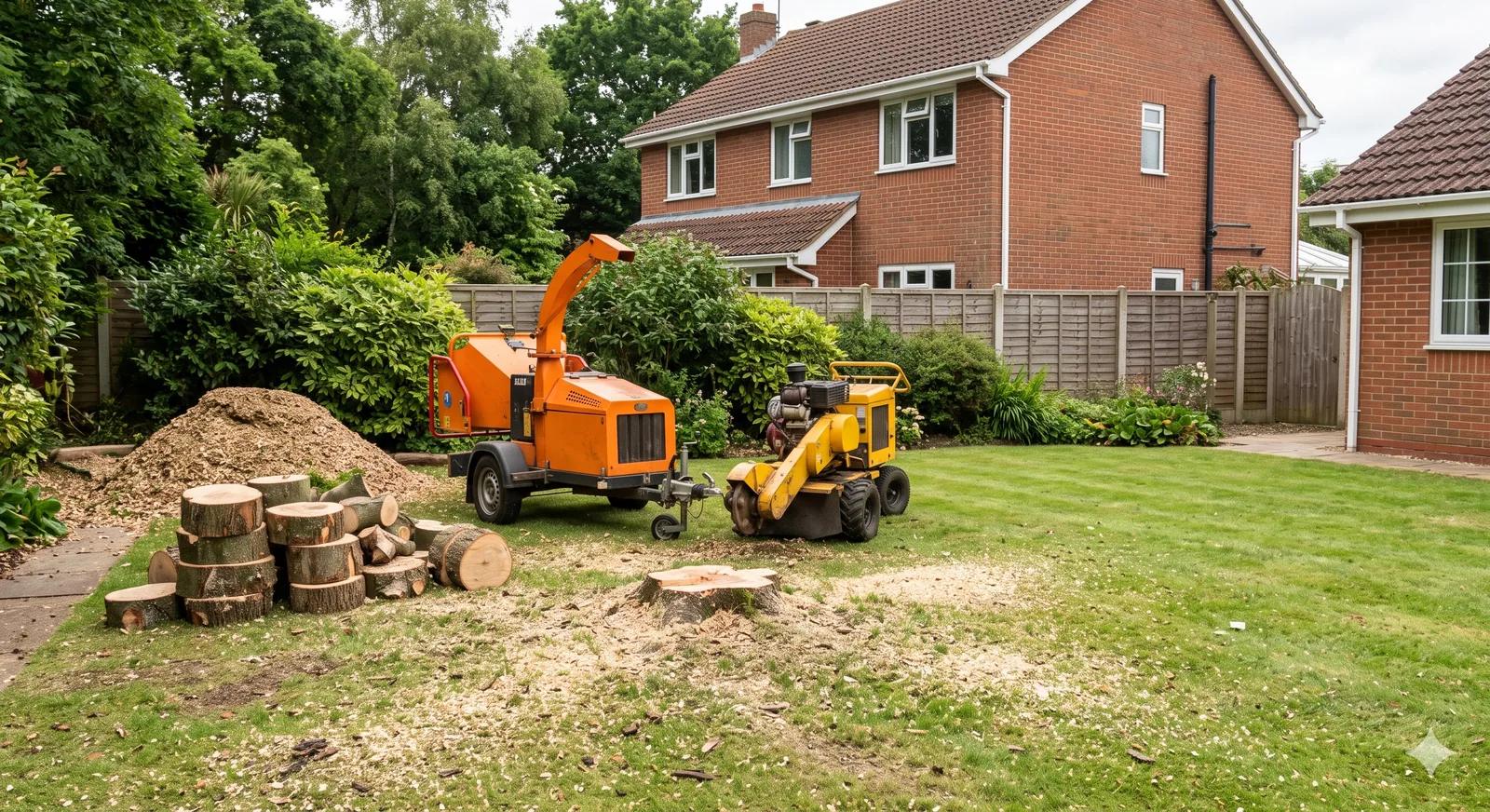
How to Choose Between Crown Reduction and Crown Lifting for Your Situation
Start with a precise problem statement. Are branches overhanging a neighbour's garden, blocking a view, or casting excessive shade on your home? That's a size problem—crown reduction. Are low branches forcing you off the path, blocking vehicles, or killing grass? That's a clearance problem—crown lifting.
Age and species determine what the tree can handle. A 15-year-old beech tolerates reduction better than a 100-year-old oak because younger trees redirect growth more effectively and compartmentalise wounds faster. Older specimens—over 80 years—should lean toward lifting, which removes less foliage and imposes lower stress. Oak, ash, and lime tolerate both techniques. Cherry, birch, and most conifers are poor candidates for reduction.
Look at your site. Tree Preservation Order? Crown reduction needs planning permission from your local council; lifting branches under 75mm is often exempt (though check your council's specific rules first). Tight access—narrow drive, building proximity? Lifting generates less waste and needs smaller equipment. Reduction is messier and takes longer.
Cost and timeline shift the equation. Lifting costs less and finishes in one session for most trees. Reduction costs more, takes longer, and may need follow-up pruning in 3–5 years to manage regrowth. If you need significant height reduction (2 metres or more), expect staged work over two or three sessions—rushing it risks killing the tree.
Need a tree surgeon for crown work?
Find a qualified local tree surgeon
We connect UK homeowners with vetted, insured tree surgeons in their area. Tell us about your tree and get matched.
This article is published by an independent arboriculture practice for informational purposes only and does not represent or claim affiliation with any government body, professional association, or official authority.
Frequently Asked Questions About Crown Reduction and Crown Lifting
What happens if you crown reduce too much?
Over-reduce—remove more than 30% of the canopy in one go—and you break the tree's ability to seal wounds. Heart rot, dieback, and epicormic growth (weak shoots from dormant buds) follow. The tree may survive, but with compromised structure and a shorter lifespan. Resources that should feed new growth get diverted to wound response instead, leaving you with a permanently weakened skeleton.
Can crown lifting be done in winter?
Year-round, mostly. Late winter (January to March) is ideal because the tree is dormant and wounds seal as growth restarts in spring. Avoid lifting Prunus species (cherry, plum) between April and October—silver leaf disease risk is high during this window. Summer lifting is fine for oak, ash, lime, and most conifers, provided the tree isn't already drought-stressed.
How long does it take a tree to recover from crown reduction?
Compartmentalisation and growth redirection happen within one or two growing seasons for most broadleaf species. Visible recovery—regrowth from lateral branches, wound closure—shows within 18–24 months for oak, ash, and lime. Slower species like beech take three to four years. Full structural recovery, where canopy density and balance return, typically stretches to three or five years.
Is crown reduction the same as tree topping?
No. Reduction cuts back to suitable lateral branches, keeping the tree's natural form. Topping (lopping) makes crude cuts into bare wood, leaving stubs with nothing to regrow from. Stubs die back and decay. The tree panics into epicormic growth—dense, weak shoots that weaken structure further. BS3998:2010 forbids topping; it's considered destructive and causes permanent damage.
How often should crown work be repeated?
Crown lifting is usually once. Remove the lower branches to your target height and you're done—mature trees rarely develop significant new low growth. Crown reduction may need revisiting in 5–10 years as the canopy fills back in, but well-executed reduction on a mature tree shouldn't require repetition for at least a decade. Never reduce the same tree more often than every five years.
What trees respond best to crown reduction?
Oak, ash, lime, and hornbeam handle reduction well because they compartmentalise wounds effectively and redirect growth reliably. Maple and sycamore also respond positively but are prone to epicormic growth if over-reduced. Avoid heavy reduction on cherry (silver leaf, bacterial canker risk), birch (prone to dieback), and most conifers (they don't regrow from old wood).
Will crown lifting damage my tree?
No—when done properly. Limiting lift to 15% of live crown height and making cuts just outside the branch collar causes minimal harm. Lower branches naturally die as the canopy shades them; lifting accelerates a process that happens anyway. Damage only occurs if you over-lift (removing more than 20% of crown height, depleting the photosynthetic factory) or make flush cuts into the trunk, creating large wounds the tree cannot seal.