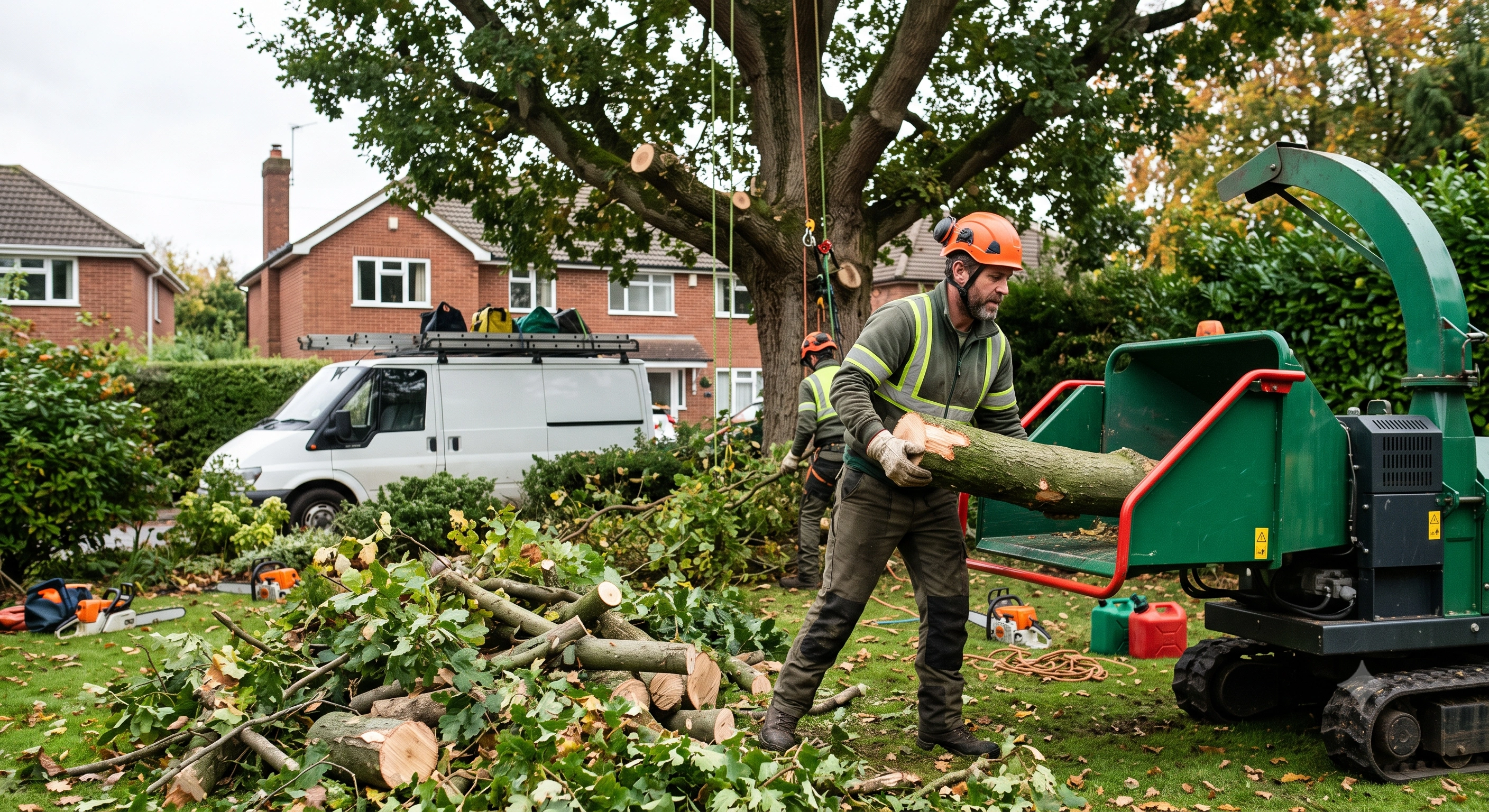
A one-person tree surgery business in Surrey landed fourteen new residential contracts in three months. The formula was straightforward: overhaul the Google Business Profile, collect video testimonials, join two local trade networks. Six years in the trade. NPTC tickets. Yet nothing moved until this operator targeted specific channels. Here's the pattern: most tree surgeons struggling to fill the diary lack visibility, not skill.
Tree surgery – the practice of managing trees through pruning, felling, dismantling, and health assessment, combining arboriculture knowledge with rigging and climbing skills (Arboricultural Association, UK). Also called arboriculture or professional tree care.
Key Takeaways
- Google Business Profile optimisation drives the highest number of inbound enquiries for local tree surgeons in the UK, ahead of paid ads or directories.
- Public liability insurance (minimum £5 million cover) and recognised qualifications (NPTC CS30, CS31, CS38) are non-negotiable trust signals in marketing materials.
- Storm-season proactive outreach (September–March) yields a 40 per cent higher conversion rate than reactive summer marketing for established firms.
- Referral networks with landscapers, property managers, and estate agents produce recurring commercial work at zero acquisition cost once relationships are established.
- Specialisation in heritage trees, palm care, or utility-line clearance commands a 20–30 per cent premium over general tree work and reduces direct competition.
What Qualifications Do You Need to Win More Tree Surgery Jobs?
Start with the baseline: NPTC certificates of competence for chainsaw maintenance (CS30), cross-cutting (CS31), and tree climbing and aerial rescue (CS38). Domestic and commercial clients check these first because they signal you meet Health and Safety Executive expectations and understand safe systems of work. When homeowners compare two or three operators at similar price, the one who mentions LANTRA-awarded tickets or CS39 (chainsaw from a rope and harness) typically wins.
Beyond baseline tickets, professional certifications separate you from the pack. An International Society of Arboriculture (ISA) Certified Arborist credential demonstrates depth in tree biology, pest diagnosis, and risk assessment – knowledge that attracts high-value work such as conservation-area tree management or tree-preservation-order applications. The Arboricultural Association's Technician Certificate (TechCert) and Professional Diploma (ProfDip) pathways open UK-specific doors, particularly for local-authority contracts or listed-estate work. Large property-management firms and insurance companies increasingly specify degree-level qualifications (BSc Arboriculture, HND Forestry) or RFS-accredited consultancy registration when commissioning tree surveys and risk reports – miss these markers, and your quote gets filtered out before review.
Insurance functions as a trust signal in every quote you issue. Public liability of at least £5 million is standard; many commercial clients demand £10 million because a single mistake – a felled tree hitting a neighbour's garage, a climber's fall – could expose them to six-figure claims. Employers' liability (legally required if you have staff) and professional indemnity (for survey work and tree-condition reports) matter equally. Display certificate numbers and expiry dates on your website footer, quote templates, and van livery. Procurement officers check these details; the specificity signals competence.
Continuing professional development keeps certifications valid and knowledge current – and it's not optional. The Arboricultural Association requires members to log CPD annually; ISA Certified Arborists must earn CEUs (continuing education units) every three years. Attend regional Arb Show events, local AA branch meetings, or online HSE updates on LOLER and PUWER amendments. Document everything in your CPD log; that record doubles as LinkedIn content and a website credibility marker, telling prospects your practice evolves with standards.
Do Tree Surgery Apprenticeships Lead to More Job Opportunities?
A Level 2 or Level 3 Arborist apprenticeship through the Institute for Apprenticeships and Technical Education provides direct entry to employment and builds foundational NPTC competences on the job. Apprentices acquire CS30, CS31, CS38, and aerial-rescue skills under supervision, then sit end-point assessments that combine practical tasks, portfolio review, and oral questioning. Three hundred to four hundred days of supervised climbing and rigging experience creates genuine confidence; employers gain levy funding and a trained operative at lower cost.
After apprenticeship, many climbers move into self-employment within two to three years. Your NPTC tickets, workplace references, and documented site experience (photographs, risk assessments, method statements) equip you to compete for smaller domestic contracts and grounds-maintenance tenders. Larger companies sometimes retain apprentices as full-time climbers with pathways to supervisor or contract-manager roles – a steady pipeline where you learn commercial bidding, costing, and client management before striking out alone.
How Can Digital Marketing Generate More Tree Surgery Leads?
Claim and verify your Google Business Profile (formerly Google My Business) before spending anywhere else. Upload high-resolution photographs of completed work – chip heaps, dismantled oaks, tidy sites – and select precise service categories: tree surgeon, tree service, and arborist. Write a complete business description mentioning towns within your travel radius and specific services: emergency tree removal, crown reduction, stump grinding, BS5837 surveys. Google matches local search phrases to profile text, so be explicit. Collect and respond to every review; profiles with twenty-plus reviews and regular activity rank higher in the local pack.
Local search dominates tree-surgery enquiries. When a homeowner types "tree surgeon near me" or "emergency tree removal Guildford," Google returns three map results and organic listings. Target long-tail keywords in your profile and website copy: "oak tree crown reduction Berkshire," "ash dieback removal Hampshire," "TPO application arborist Surrey." Each town page should list landmarks, postcode sectors served, and travel guarantees ("covering RG postcodes within forty minutes"). Embed a Google Map frame showing your service area; this signals geo-relevance to both users and algorithms.
Your website must be mobile-first. Place phone number and WhatsApp buttons in the header, sticky on scroll – visitors should never lose access to contact. Build dedicated pages for each core service (tree felling, pruning, stump grinding, hedge trimming, BS3998 inspections) with before-and-after galleries, typical timings, and transparent pricing bands ("small garden tree removal from £400; large roadside oak from £1,800 depending on access"). Add an emergency-callout banner during storm season. Speed matters: a three-second load time halves bounce rate. Use compressed images, minimal plugins, and a UK-based host.
Reviews are modern word-of-mouth. After every job, send a follow-up text or email with direct links to Google, Facebook, and Trustpilot. Incentivise reviews subtly – "Your feedback helps us improve and helps neighbours find reliable tree care" – but never pay for testimonials (against platform terms). Display review widgets on your homepage; scatter testimonials throughout service pages, including the client's town ("Fantastic job removing our ash tree – Camberley resident"). Respond within twenty-four hours to every review; a thoughtful reply to a negative one often converts sceptical prospects better than five-star praise alone.
What Marketing Strategies Work Best for Tree Surgeons?
Consistency across touchpoints builds recognition. Van livery, workwear, website, social profiles, quote templates – choose two or three brand colours and a clean sans-serif typeface, then apply them everywhere. Your company name, phone number, and two-line service summary should appear on both sides of your vehicle and the rear doors. A well-signed van parked on a residential street during a job acts as a billboard to twenty neighbours. Capture that attention with readable text and a short domain or phone number they can remember.
Leaflet drops still work in affluent suburbs with mature tree stock. Design an A5 flyer highlighting your top three services, NPTC ticket numbers, insurance details, and a single clear call-to-action (scan QR code for free quote, call for storm-damage assessment). Target streets with large gardens and older housing stock; Ordnance Survey maps identify conservation areas and tree-lined avenues. Five hundred leaflets per quarter in a two-mile radius yields a one to two per cent response rate – that's five to ten enquiries and two to four jobs per drop.
Local newspapers and parish magazines reach older homeowners who prefer print. A quarter-page ad costs £80–£150 per month and runs for twelve issues; include a seasonal angle each quarter (spring pruning, summer ivy control, autumn leaf clearance, winter storm prep). Register with your district council's business directory and community noticeboards – parish councils often list approved contractors there. Sponsor a local cricket club, village fete, or school event; your logo on a scoreboard or event banner builds familiarity and trust in tight-knit communities where word-of-mouth still matters most.
Comparison: Lead-Generation Channels for Tree Surgeons
| Channel | Cost per lead (approx.) | Conversion rate | Best for |
|---|---|---|---|
| Google Business Profile (organic) | £0 (time investment only) | 15–25% | Local domestic enquiries; emergency callouts |
| Google Local Services Ads | £8–£15 | 10–18% | Immediate visibility; pay-per-lead model |
| Facebook / Instagram ads | £5–£12 | 5–12% | Brand awareness; seasonal campaigns |
| Checkatrade / Trustatrader | £10–£18 | 8–15% | Homeowners seeking vetted traders |
| Referrals (landscaper / estate agent) | £0 (commission or reciprocal) | 30–50% | High-value repeat work; commercial contracts |
| Direct leaflet drop | £15–£25 | 1–2% | Targeting affluent postcodes with mature trees |
Takeaway: Google Business Profile optimisation and referral networks deliver the highest return on effort for most tree surgeons. One consequence: if you skip Google reviews and business profile photos, you hand your local search visibility to competitors who don't. Paid lead-generation platforms suit operators with capacity to handle volume and convert within hours – hesitation costs you the lead fee.
How Do I Use Social Media to Get Tree Surgery Clients?
Post consistently to Facebook, Instagram, and TikTok with a mix of educational content, job progress updates, and safety demonstrations. Facebook remains the dominant platform for UK homeowners aged forty-plus. Join local community groups ("Weybridge Residents," "Godalming Neighbourhood Watch") and contribute helpful answers when residents ask tree-related questions. Share before-and-after carousels of completed jobs, tag the town, and ask satisfied clients to comment or share.
Run targeted Facebook ads during storm season with a tight geographic radius (five to ten miles) and a single objective: "Emergency tree removal – call now." This specificity works because storms create urgency; a generic ad runs during calm months and wastes budget.
Instagram showcases visual craftsmanship better than any other platform. Post high-quality images of climbing sequences, rigging setups, and finished gardens with fresh wood chip and tidy borders. Stories work especially well: document a job from arrival to clean-up in real time. Followers appreciate transparency and the behind-the-scenes narrative. Add location stickers, tag local landmarks, and use a consistent set of hashtags: #TreeSurgeon, #Arborist, #UKTreeCare, plus your town and county tags.
Reels perform best under thirty seconds. Time-lapse felling footage, knot-tying tutorials, and "spot the hazard" safety quizzes all generate engagement and shares far more reliably than static posts.
TikTok attracts a younger demographic but builds brand awareness and recruits apprentices effectively. Film short clips demonstrating tree-identification skills, chainsaw maintenance, or the physics of rigging with text overlays explaining the technique. Educational content ("Why you should never top a tree" or "Three signs your ash has dieback") earns far more reach than overt selling. Tag industry creators, use trending audio, and reply to comments with follow-up videos. The algorithm rewards consistency; post three to five times per week for the first month to gain traction.
Which Lead Generation Methods Deliver the Best ROI for Arborists?
Google Local Services Ads (LSA) place your business at the very top of search results, above both organic and standard pay-per-click ads. You pay per lead (phone call or message), not per click, and Google screens your credentials (insurance, licenses, reviews) before approval. UK tree surgeons using LSA report cost-per-lead between £8 and £15, with conversion rates around ten to eighteen per cent when response time is under ten minutes.
Set a daily budget, define your service area by postcode, and answer every inquiry immediately. Late replies forfeit the lead and waste the fee – that lost £12 call-out is worse than if you'd never paid for it.
Traditional trade directories – Checkatrade, Trustatrader, MyBuilder, Bark – generate steady residential leads but require active profile management. Trustatrader membership costs approximately £80–£100 per month; Checkatrade charges per lead plus monthly subscription. Upload your NPTC certificates, insurance documents, and recent photographs. Respond to quote requests within one hour to outpace competitors.
Conversion hinges on three things: profile completeness, review score, and quote detail. A templated one-line response loses to itemised quotes that explain access, timings, and debris removal. Customers browsing five profiles at once choose the arborist who sounds organised, not rushed.
Referral partnerships with complementary trades yield the highest-margin work with zero acquisition cost. Landscape gardeners, fencing contractors, and groundwork firms all encounter customers who need trees removed or pruned. Offer a ten per cent finder's fee or reciprocal referral arrangement. Property-management companies, estate agents, and land surveyors commission tree work regularly; introduce yourself with a printed rate card, insurance summary, and offer to survey their portfolio for tree-risk issues.
Building surveyors writing homebuyer reports often flag tree concerns. A courtesy follow-up to the surveyor (not the buyer) can generate direct referrals – surveyor relationships are repeatable, whereas one-off homebuyer contacts vanish after the purchase completes.
Cold outreach to commercial prospects works when timed and targeted well. Compile a list of golf courses, caravan parks, schools, housing associations, and church estates within your area. Telephone the facilities manager or estate bursar and offer a no-obligation tree-safety walk-around. Many commercial sites have never commissioned an Arboricultural Association Lantra-recognised tree survey; position it as risk management and insurance compliance, not a sales pitch. Follow up quarterly with seasonal offers: pre-winter storm checks in September, spring pruning windows in March.
How Does Networking Help Tree Surgeons Get More Work?
Attend regional Arboricultural Association branch meetings, usually held quarterly in village halls or conference centres. You'll meet consulting arborists, local-authority tree officers, and equipment suppliers. These gatherings mix CPD talks with informal networking; consultants who cannot climb often subcontract hazardous work to trusted climbers they've met at branch events. Introduce yourself, exchange business cards, and follow up with a LinkedIn connection request and brief message.
Tree officers sometimes pass on lists of approved contractors to residents phoning the council. Getting on that informal list requires face-to-face familiarity – an email application won't do it.
Join local business networks such as BNI (Business Network International) chapters, chambers of commerce, or independent breakfast clubs. BNI operates on a one-trade-per-chapter rule, so you gain exclusive referrals from builders, electricians, plumbers, and estate agents in your group. Membership costs around £600–£800 per year plus meeting attendance, but one large referral typically covers the annual fee. Prepare a sixty-second introduction explaining what makes a good referral for you: "homeowners with large gardens, conservation-area properties, or post-storm damage."
Volunteer for community tree-planting days, school forest-school sessions, or National Tree Week events organised by the Woodland Trust or Tree Council. Civic engagement builds reputation and generates goodwill; parents, teachers, and parish councillors remember the tree surgeon who donated time to plant saplings in the park. Wear branded workwear, bring a banner or gazebo with your logo, and hand out business cards to organisers. This visibility converts slowly but reliably – within twelve months, volunteers become customers and recommend you within their own networks.
Collaborate with ecological consultants on planning applications and habitat surveys. Developments requiring bat surveys, newt mitigation, or tree-retention plans need both the ecologist's report and an arborist's method statement for tree protection (BS5837). Ecologists rarely climb; climbers rarely write ecology reports. A reciprocal relationship keeps you both busy and adds value to planning clients. Register on the Arboricultural Association's Find a Professional directory and the Arb Approved Contractor scheme to appear in consultant searches.
What Business Development Strategies Increase Tree Surgery Job Volume?
Plan marketing around the seasonal cycle of tree work and client demand. Storm season runs September through March and generates emergency callouts, insurance work, and safety inspections. Begin proactive outreach in August with leaflet drops, email campaigns to commercial clients, and social-media posts highlighting storm-damage response. Spring (March to May) drives crown reductions, formative pruning, and wildlife-aware work before bird-nesting season; promote BS3998 adherence and nesting surveys.
Summer slows for mature-tree work – oak and elm pruning bans apply in some regions – but accelerates for hedge trimming, ivy removal, and garden clearances. Adapt your messaging and service emphasis quarterly to match what clients need when they need it. A leaflet about winter storm damage sent in June reaches nobody; the same leaflet in August reaches anxious homeowners stocking up on prep.
Commercial contracts offer volume and recurring revenue but require different pitching than residential work. Local authorities, academies, and housing associations issue tenders through procurement portals (Contracts Finder, In-Tend, local-authority supplier registration). Register on all relevant platforms and set up email alerts for tree-work tenders.
Write method statements and risk assessments to PAS 3998 (formerly BS3998) standards, detail your insurance and H&S policies, and include CVs of key operatives. Price competitively but never undercut to loss; public-sector clients value compliance and reliability over the lowest bid, and a strong health-and-safety record beats a rock-bottom quote.
Specialisation sets you apart where the market is crowded, and it commands higher rates. Heritage-tree care demands advanced rigging, minimal-impact techniques, and often liaison with conservation officers—few climbers develop these skills, so work outpaces supply. Palm specialists serve coastal towns and botanic gardens where Trachycarpus and Cordyline dominate; knowing crown-cleaning and pest cycles (palm weevil, sooty mould) becomes your edge. Utility-line clearance for Distribution Network Operators requires NRSWA training and electrical-awareness courses but yields year-round contract income. Risk assessment and consultancy—writing tree-condition reports, preparing for BS5837 compliance—leverages knowledge over physical labour and scales without hiring more crew.
Equipment investment unlocks jobs you cannot currently bid for. A large crane or MEWP opens access to roadside trees, tight rear gardens, and sites where climbing is prohibited by insurance or client policy. Stump grinders (thirty-five horsepower and above) let you offer removal and reinstatement in one visit, raising job value significantly. A log processor or firewood splitter creates secondary income from timber; many domestic clients buy back seasoned logs as part of the contract. Air-spade tools and sonic tomography position you for root investigations and decay detection—work that consulting arborists subcontract out. Finance expensive kit through lease or hire purchase; the monthly cost often covers itself within three to six jobs.
Should I Specialise or Offer General Tree Surgery Services?
Start general. Build breadth of experience, reputation, and cash flow, then narrow your focus as the most profitable or enjoyable niches emerge. A newly qualified climber benefits from taking any safe, legal job—domestic pruning, hedge reduction, small felling—to refine rigging skills, learn site logistics, and collect testimonials. After two to three years and two hundred to three hundred jobs, patterns surface: perhaps conservation-area work excites you, or you prefer commercial contracts with predictable scope. At that point, begin marketing a specialism while keeping general work ticking over.
Specialisation cuts competition and raises margins. If your county has twenty general tree surgeons but only two who advertise BS5837 planning support, clients needing that service have fewer choices and accept higher quotes. Palm specialists in Cornwall or Devon serve a niche that mainland climbers cannot easily replicate. Utility companies maintain approved-contractor lists for vegetation management; gaining DNO approval requires NRSWA and electrical-awareness training—a barrier that excludes casual operators. Clients trust specialists more. A "Heritage Tree Surgeon" answering a quote request for a Listed oak commands more confidence than "Joe's Tree Services."
General practices retain flexibility. If commercial contracts dry up, you pivot to domestic work; if a planning-application slump hits, you still have emergency callouts and routine pruning. Younger businesses often lack cash reserves to ride out a lean quarter in a narrow niche; offering crown reductions, stump grinding, hedge work, and firewood sales spreads risk. Many successful operators maintain a seventy–thirty split: seventy per cent general work that pays the bills, thirty per cent specialist work that builds reputation and premium pricing.
Test specialisms before committing fully. Add a single service page ("TPO Application Support – Arborist Reports for Surrey") to your website and run a three-month Google Ads campaign targeting planners and architects. Track enquiries, conversion rates, and job margins; if the niche proves lucrative, expand your content, invest in equipment, and pursue relevant CPD. If it flops, you've spent a few hundred pounds and learned what your market doesn't value. Serial testing—trying commercial groundwork, then tree surveys, then ecological partnerships—reveals hidden opportunities faster than guessing.
How Do Established Tree Surgery Companies Scale Their Job Pipeline?
Adopt a customer-relationship-management system. Track leads, quotes, and follow-ups without relying on memory or paper. Software such as Jobber, Tradify, or Fergus integrates scheduling, invoicing, and client communication; you record every enquiry, set follow-up reminders, and measure conversion rates by source. CRM data exposes patterns: perhaps Checkatrade leads convert at eight per cent while referrals convert at forty per cent, or quotes sent within two hours win at double the rate of next-day responses. Use those insights to allocate time and budget; stop feeding low-yield channels and double down on what works.
Train employees to your standards before scaling crew numbers. Write standard operating procedures for rigging, chainsaw use, site setup, and client interaction; video-record best-practice examples and review them in toolbox talks. Pair new climbers with experienced operators for three to six months before solo work; mistakes cost reputation and insurance premiums, so invest in supervision. Require all staff to hold current NPTC tickets, first aid at work, and emergency-rescue competence; audit certificates quarterly. Culture matters: a crew that cleans up meticulously, speaks politely to clients, and reports near-misses protects your brand as effectively as technical skill.
Subcontract overflow work to trusted peers rather than turning down jobs or rushing. Build a network of two or three other local climbers who meet your standards; agree reciprocal arrangements where you pass leads during busy periods and they return the favour. Draft a simple subcontractor agreement covering insurance, payment terms (typically cost-plus-fifteen-per-cent), and quality expectations. Subcontracting preserves client relationships (the job still gets done under your name), maintains cash flow, and prevents burnout. As demand stabilises, convert reliable subcontractors into employed staff.
A Hampshire-based tree surgeon grew from one person in 2019 to five crews by 2024. The owner invested early in CRM software and Google Business Profile optimisation, generating consistent leads. Year two: hired an apprentice. Year three: added a second climber. Year four: brought on a groundworker and sales coordinator. By year five, the owner had stepped back from daily climbing to focus on quoting, procurement, and business development. Key success factors included systematic lead tracking, rigorous training, and reinvesting thirty per cent of profit into equipment and marketing each year. The firm now handles local-authority contracts, golf-course maintenance, and residential work across three counties, with turnover exceeding £600,000 annually.
Diary looking empty?
Get more tree work coming in
We run Google and Meta campaigns for UK tree surgeons only — exclusive leads, never shared. Book a free strategy call.
Published by Tree Surgeon Leads UK, a specialist marketing and lead generation agency working with UK tree surgeons.
Frequently Asked Questions
How long does it take to build a steady tree surgery client base?
Most newly qualified tree surgeons establish a steady pipeline within twelve to eighteen months of active marketing, provided they combine Google Business Profile optimisation, local networking, and consistent quality work that generates word-of-mouth referrals. Operators who rely solely on directory listings or sporadic social-media posts often take two to three years to fill a diary reliably. Speed growth by targeting commercial clients (property managers, schools, golf clubs) alongside residential work. Ask every satisfied customer for a review and a referral within forty-eight hours of job completion.
What's the average cost to acquire a tree surgery lead?
Lead-acquisition costs vary by channel. Organic Google Business Profile enquiries cost nothing beyond time investment. Paid sources range from £5–£12 for social-media ads, £8–£15 for Google Local Services Ads, and £10–£18 for trade directories such as Checkatrade or Trustatrader. Referrals from landscapers, estate agents, or previous clients cost zero in direct expenditure but may include reciprocal referral fees or commission splits of ten per cent. The most profitable operators focus on channels with both low cost and high conversion: organic local search, referrals, and targeted leaflet drops in affluent postcodes.
Do I need a large equipment fleet to compete for jobs?
No. Many successful tree surgeons operate profitably with a basic kit comprising chainsaw, climbing gear, rigging equipment, chipper, and a small van. Specialising in climbing-access work or pruning reduces reliance on expensive machinery and allows competitive pricing for jobs larger firms consider too small. As you scale and target commercial contracts or roadside work, investment in a MEWP, crane, or larger chipper opens higher-value opportunities—but delay these purchases until job volume justifies the monthly finance or hire cost. Subcontract crane or stump-grinding work in the early years rather than buying equipment that sits idle.
How do tree surgeons find commercial contracts?
Register on public-sector procurement portals (Contracts Finder, local-authority supplier databases, In-Tend) and set up alerts for tree-work tenders in your region. Directly approach property-management firms, facilities managers at schools and colleges, golf-course head groundskeepers, and diocesan surveyors responsible for churchyards; offer a free tree-safety walk-around to identify hazards and demonstrate your expertise. Join local business networks and attend Arboricultural Association branch meetings where consulting arborists and local-authority tree officers gather. Commercial clients value reliability, insurance compliance, and detailed method statements; invest time in learning PAS 3998 standards and writing risk assessments that meet procurement expectations.
What insurance do clients expect tree surgeons to carry?
Domestic and commercial clients universally require public liability insurance of at least £5 million; many property-management firms, local authorities, and utility companies specify £10 million cover as a contract condition. If you employ staff or apprentices, employers' liability insurance (minimum £5 million) is legally mandatory under the Employers' Liability (Compulsory Insurance) Act 1969. Professional indemnity insurance (typically £1 million to £2 million cover) becomes important when you provide written advice, tree surveys, or BS5837 reports, because errors in these documents can trigger financial claims. Display your insurance certificate numbers and renewal dates on your website footer, quote templates, and vehicle livery to reassure clients before they even contact you.