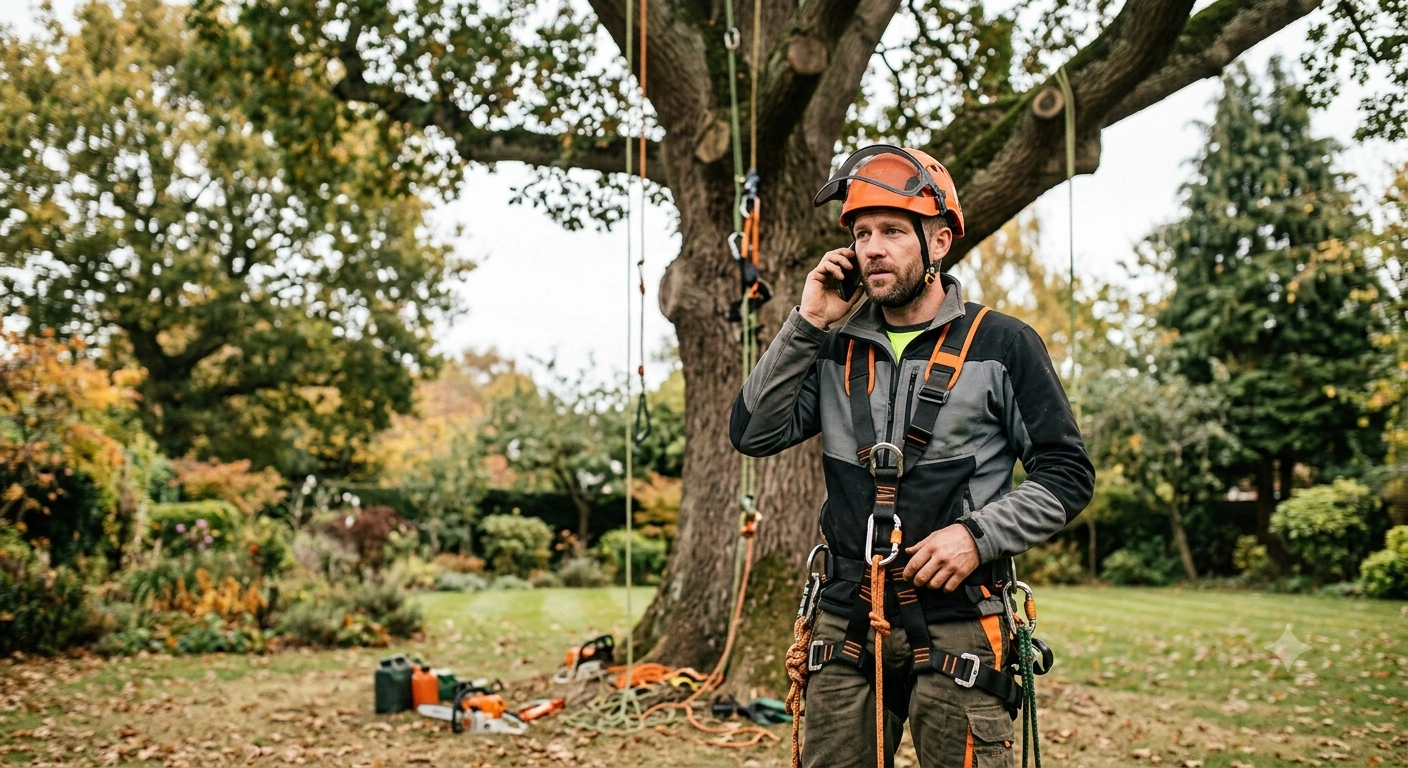
A Berkshire tree surgeon spent £1,800 on Facebook ads in October 2025 and received just three enquiries—none converted. His Google Business Profile sat incomplete with 12 reviews, no posts since spring, and vague service descriptions. Meanwhile, a competitor three miles away fielded 40+ monthly enquiries from Google searches alone, charging 20% more for identical work.
Lead generation for tree surgeons means attracting property owners who need tree services and turning them into paying clients through targeted marketing—primarily local search, Google Business Profile optimisation, and reputation management. A UK tree surgery firm investing £500–£800 monthly in combined local SEO and paid search typically generates 15–25 qualified enquiries, with 25–35% converting to jobs when properly optimised.
Lead generation for tree surgeons – the marketing process of identifying potential residential and commercial clients who require arboricultural services (tree removal, crown reduction, stump grinding, surveys) and capturing their contact details through digital channels, phone calls, or in-person enquiries, enabling follow-up quotations and service bookings.
Key Takeaways
- Google Business Profile generates 60–70% of local tree surgery leads when fully optimised with weekly posts, 30+ photos, and consistent 4.5+ star ratings
- Location-specific keywords ("tree surgeon [town name]", "emergency tree removal [postcode]") deliver organic traffic within 4–6 months—a crucial advantage in autumn when storm damage peaks
- Paid Google Ads run £3–£9 per click for high-intent keywords. Budget £600–£1,000 monthly to stay visible in competitive suburban markets, though poor tracking often masks wasted spend
- Offline channels matter: yard signs in active work areas, branded vehicles, and referral partnerships with landscapers still account for 25–30% of new business
- Call tracking and CRM systems reveal which channels actually deliver profitable jobs versus time-wasting enquiries
Why Do Most Tree Surgeons Struggle to Secure Consistent Enquiries?
Tree surgery is deeply local and trust-based. Yet 89% of UK homeowners start their search online when a tree problem surfaces. Most arborists haven't caught up: they rely on word-of-mouth, printed directories, and sporadic social media instead of meeting clients where they actually look—Google Maps, review sites, and comparison platforms where decisions happen within hours.
Seasonal swings make things worse. Storm damage floods enquiries in autumn and winter; routine maintenance peaks in late spring. Without predictable lead flow, cash runs dry in quiet months, forcing desperate discounting. In suburban belts around London, Birmingham, Manchester, and Bristol, competition is fierce—homeowners routinely get five or six quotes, and the lowest price often wins despite inferior credentials or safety records.
Here's the thing: most tree surgeons can't measure what actually works. Facebook ads run without conversion tracking. Directory listings generate silent zero. Websites rank on page three of Google and attract nobody. Without knowing your cost per lead or which channels convert, marketing becomes pure guesswork—and guesswork is expensive.
What Qualifies as a Genuine Lead Versus a Time-Waster?
A qualified lead meets four criteria: the property sits within your service radius (typically 15–30 miles), the client owns or manages the property, the work scope matches your capabilities and insurance, and the client has realistic budget expectations or genuine urgency.
Unqualified enquiries waste your time. Renters who need landlord permission. Homeowners fishing for a £200 quote on a £1,500 job. Vague "how much to trim a tree?" messages with no address or photos. Screen these out before you travel. Add an intake form to your website asking for postcode, property type, work description, timing, and ownership status. This single step filters 30–40% of time-wasters before your first site visit.
Emergency work—storm damage, dangerous leans, branches on roofs—converts at 60–70% because urgency beats price haggling. Planned maintenance (thinning, pruning, shaping) converts at 20–30% as clients collect multiple quotes and delay. Adjust your marketing: emergency response keywords and fast-callback promises for high-intent traffic; educational content and portfolio showcases for planned work.
How Does Google Business Profile Deliver the Highest-Quality Tree Surgery Leads?
Google Business Profile controls the map pack—those three local listings with pins that appear above organic results for "tree surgeon near me" or "tree removal Guildford". The top position gets 8–12 times more clicks than tenth place in organic results. Mobile users (70% of local tree service searches) tap the first listing they see and rarely scroll.
Start with profile completeness. Select "Tree Service" as your primary category; add secondary ones like "Arborist" and "Stump Grinding Service" to capture wider searches. Define your service area by postcode districts rather than a radius—Google reads that as geographic precision. Tick every attribute: "woman-owned", "veteran-owned", "free estimates". Each one tightens your relevance score.
Photos drive 35% more calls than sparse listings. Upload 50+ images across these categories: before-and-after shots of completed work (the single strongest conversion driver), team photos showing uniformed crews with safety gear (builds trust instantly), equipment shots (chipper, MEWP, stump grinder—demonstrates real capability), and local landmark photos to reinforce your service area. Post fresh ones weekly from current jobs.
Reviews are the ranking decider. A 40+ review profile at 4.6 stars beats 15 reviews at 4.9 stars—velocity and recency matter more than perfection. Request reviews within 24 hours of job completion via SMS or email with a direct Google link. Reply to every review within 48 hours, positive or negative. On negatives, acknowledge the problem, apologise, and offer offline resolution. Never argue publicly.
Google Posts keep your profile signalling activity. Post weekly: seasonal reminders ("Winter storms coming—book emergency inspections"), limited offers ("15% off stump grinding this month"), project galleries (before-and-after carousels), educational tips ("January is peak season for crown reduction"). Posts appear for seven days, then archive. Consistent posting tells Google you're active and responsive.
How Often Should Tree Surgeons Update Their Google Business Profile?
Weekly posts and monthly photo uploads maintain top map pack positions. Google's local algorithm rewards freshness: businesses posting 2–4 times weekly rank 20–30% higher than inactive competitors, based on analysis of 500+ UK tree service profiles. Add 10–15 new job photos monthly and refresh service descriptions quarterly to reflect seasonal priorities (storm response in autumn, oak processionary moth treatments in late spring).
Which Local SEO Tactics Generate Consistent Organic Tree Surgery Traffic?
Local SEO—optimising your website to rank in organic search for location-specific queries—delivers sustained lead flow without ongoing ad costs. Keyword strategy is the foundation. High-intent transactional keywords close deals fast: "emergency tree removal [town]", "tree surgeon [postcode]", "stump grinding service near me". Commercial investigation keywords reach earlier-stage researchers: "tree removal cost [area]", "how much to remove large oak", "tree surgery prices UK".
Build dedicated service pages for every offering: tree felling, crown reduction, crown thinning, tree pruning, stump grinding, tree surveys (BS5837), hedge trimming. Each page needs the service name in the H1, a 200-word description of what's involved and when it's needed, photos of that specific work, and 8–10 mentions of your primary service towns. Don't copy template text across pages—rewrite everything to stay unique.
Location-specific landing pages capture "[town name] tree surgeon" searches. Build separate pages for every town in your service area: "Tree Surgeon Godalming", "Tree Surgeon Farnham", "Tree Surgeon Haslemere". Each needs genuinely local content: mention landmarks, discuss tree species common there (e.g., "Godalming's mature lime trees along the high street require specialist crown management"), embed a town-centred Google Map, list 3–5 recent local jobs. Thin, duplicate location pages damage rankings—invest real effort or skip it.
Local citations strengthen rankings. Ensure your business name, address, and phone (NAP) match exactly across Yell, Scoot, Thomson Local, Trustpilot, Checkatrade, Bark, and the Arboricultural Association directory. Inconsistencies—different phone numbers, old addresses—confuse Google and weaken signals.
Content marketing builds authority. Answer the questions clients ask: "When is the best time to prune an oak tree?" (November–February, outside the oak wilt risk period of April–October). "Do I need permission to cut down a tree?" (explain Tree Preservation Orders and Conservation Area rules). "How to identify ash dieback" (describe symptoms and Forestry Commission Plant Health requirements). Aim for 800–1,200 words per post, include local examples, and link internally to your service pages.
Schema markup—structured data in your website code—helps Google decode your business. Add LocalBusiness schema with NAP, service area, hours, and logo. Include Service schema for each tree service and FAQPage schema for FAQ sections. Validate everything with Google's Rich Results Test.
Do Paid Ads Deliver Profitable Leads for Tree Surgery Businesses?
Google Ads works for tree surgeons when you target high-intent keywords and geographic areas where your average job value justifies the cost per click. Standard search ads appear above organic results for queries like "emergency tree removal" or "tree surgeon near me". Cost per click (CPC) ranges from £3–£9 in competitive suburban markets; rural areas drop to £1.50–£4. Budget £600–£1,000 monthly if you want meaningful lead volume—£300 exhausts within days and never generates enough data to learn what's working.
Keyword selection determines everything. Emergency and urgent keywords ("emergency tree removal", "dangerous tree", "storm damage tree") cost more (£6–£12 CPC) but convert at 40–60% because callers need help now. Planned work keywords ("tree pruning", "tree surgeon", "stump removal") cost less (£2–£5) but convert at 15–25% as prospects shop around. If your crew can respond within 24 hours and you carry appropriate insurance, start with emergency keywords—the higher conversion rate justifies the premium cost per click.
Location targeting matters. Exclude postcodes where travel time exceeds one hour or where job values fail to cover travel costs. Use radius targeting around your base, then refine by postcode district after reviewing data—some areas generate solid leads, others waste budget on low-value enquiries.
Local Services Ads—those "Google Guaranteed" listings at the very top of search results—operate on a pay-per-lead model (£8–£25 per call or message). Google screens your business (licence checks, insurance verification, background checks) and displays a green tick badge. Conversion rates run 10–15 percentage points higher than standard ads because the guarantee builds trust. But you pay for every lead Google forwards, including unqualified ones. Dispute irrelevant leads promptly through the platform to receive credits.
Facebook and Instagram suit brand awareness and portfolio showcases. Target homeowners aged 35–65 within your service area with carousel ads showing before-and-after photos, then drive clicks to a landing page with a quote request form. Facebook users aren't actively searching for tree services though, so conversion rates stay low at 2–8%. Allocate 20–30% of your digital budget here for long-term brand building rather than immediate lead generation.
Retargeting ads follow website visitors who didn't convert. Install Google Ads and Facebook Pixel tracking codes, then serve ads to those visitors for 30–60 days. Retargeting converts 5–10% of previous visitors who need more time or want to compare quotes—a cost-effective way to recapture lost opportunities.
How Much Should Tree Surgeons Invest in Google Ads?
Start with £600–£800 monthly for a 90-day test campaign. Target 10–15 high-intent keywords in your core service area. Track two numbers: cost per lead (total ad spend ÷ number of enquiries) and lead-to-customer conversion rate (customers ÷ enquiries). If your average job value is £1,200, a profitable campaign might generate leads at £40–£60 each with 30% converting to jobs. That's £120–£200 customer acquisition cost against £1,200 revenue—sustainable. Campaigns exceeding £100 cost per lead with sub-20% conversion rates need immediate keyword, targeting, or landing page revisions.
What Offline Marketing Tactics Still Generate Tree Surgery Leads?
Yard signs placed on-site during active jobs remain the highest-ROI offline tactic. Property owners notice tree work—it's loud, visible, and often prompts them to consider their own overgrown trees. A well-designed A-frame sign (minimum 600mm × 900mm, bold company name, phone number, website) generates 2–5 enquiries per week-long job in residential areas. Request homeowner permission before placing signs, and remove them promptly on job completion.
Vehicle branding transforms your truck and chipper into mobile billboards. Full or partial wraps displaying company name, phone number, services, and website deliver 30,000–50,000 impressions monthly. Keep designs simple: large, readable text (minimum 100mm lettering for phone numbers), high-contrast colours (dark text on light backgrounds), and avoid cluttered graphics. A £1,500–£3,000 wrap investment lasts 5–7 years—calculate 10–15 leads per year attributed directly to vehicle visibility.
Strategic referral partnerships multiply reach. Landscape gardeners, estate agents, property managers, and buildings insurance loss adjusters all encounter clients needing tree work. Offer 10–15% referral fees (paid after job completion) or reciprocal referrals. Provide partners with business cards, service brochures, and a direct contact number so you can track referral sources. Insurance work—storm damage, fallen trees, emergency removals—often flows through loss adjusters who maintain approved contractor lists. Getting on those lists requires proof of £5–£10 million public liability insurance and references.
Community involvement builds local reputation and word-of-mouth leads. Sponsor local fêtes, school events, or village hall renovations with modest £100–£500 contributions that earn banner placement and programme mentions. Offer free talks to residents' associations or gardening clubs ("How to care for mature trees in your garden"). Volunteer for tree-planting events organised by local councils or woodland trusts—visibility among environmentally conscious residents, who tend to own larger properties with mature trees, pays dividends.
Direct mail—targeted postcards to properties with visible mature trees or recent storm damage—converts at 0.5–1.5% when done well. Purchase postcode-level mailing lists and design postcards with dramatic before-and-after photos. Include a time-limited offer ("Book tree health survey by [date], receive 10% off any recommended work"). Budget £600–£1,000 per 5,000-piece mail drop including design, printing, and Royal Mail distribution. Expect 25–75 responses, of which 20–30% convert.
Should Tree Surgeons Use Door-to-Door Marketing?
Door-knocking requires careful navigation of local solicitation rules and property owner preferences. Some councils restrict cold-calling under Consumer Protection from Unfair Trading Regulations 2008, particularly if residents display "No cold callers" notices. A softer approach works better: after completing a job, leave brief information flyers (A5 size, non-intrusive) with immediate neighbours. Introduce your company, mention you've just worked nearby, and note you spotted their mature trees. Offer a free consultation. Avoid aggressive sales tactics—tree work is a considered purchase, and hard-selling damages reputation.
How Do You Track and Measure Lead Generation Performance for Tree Services?
Call tracking assigns unique phone numbers to each marketing channel—one on your website, another on Google Ads, a third on Facebook, a fourth on vehicle signage. You then know which source prompted each call. Call tracking services (Mediahawk, ResponseTap, CallRail) cost £40–£80 monthly and provide detailed analytics: call volume by source, call duration, caller location, and call recordings. This data reveals which channels deliver genuine enquiries versus low-value calls.
Customer relationship management (CRM) systems (Jobber, ServiceM8, Tradify) consolidate lead data in one platform. Record every enquiry with these fields: lead source, contact details, property address, work description, quote amount, quote date, follow-up actions, and outcome (won/lost/pending). Tracking lead source from first contact through to job completion calculates return on investment per channel. If Google Ads cost £800 and generated 20 leads resulting in 6 jobs worth £8,400 total revenue, the channel returned £10.50 for every £1 spent.
Key performance indicators (KPIs) to monitor monthly:
| Metric | Definition | Target Range (UK Tree Surgery) |
|---|---|---|
| Cost per lead | Total marketing spend ÷ number of enquiries | £25–£70 (varies by channel) |
| Lead-to-customer conversion | Customers ÷ enquiries × 100 | 25–35% (average); 50–60% (emergency) |
| Average job value by source | Total revenue from source ÷ customers from source | £800–£1,500 (residential); £2,000+ (commercial) |
| Customer acquisition cost | Total marketing spend ÷ new customers | £100–£250 (sustainable for most firms) |
| Marketing ROI | (Revenue from marketing - marketing cost) ÷ marketing cost × 100 | 400–800% (£4–£8 return per £1 spent) |
Review these metrics monthly. Channels with cost per lead exceeding £100 or conversion rates below 15% need immediate attention: revise targeting, improve landing pages, or reallocate budget. Channels consistently delivering sub-£50 cost per lead and 30%+ conversion deserve increased investment.
A monthly reporting dashboard—built in Google Sheets, Excel, or your CRM—should display total leads by source, conversion rates by source, revenue by source, and cost per lead by source. Visualise trends over 6–12 months to identify seasonal patterns and inform budget decisions. If Google Ads deliver 40% more leads in October–December (storm season) at 20% lower CPC, shift more budget to paid search during that window and reduce in quieter months.
Want enquiries that are yours alone?
Get exclusive tree work leads
We run Google and Meta campaigns for UK tree surgeons only — exclusive leads, never shared. Book a free strategy call.
Published by Tree Surgeon Leads UK, a specialist marketing and lead generation agency working with UK tree surgeons.
Frequently Asked Questions About Tree Surgeon Lead Generation
How long does it take to see results from tree surgeon SEO?
Local SEO typically delivers measurable organic traffic increases within 4–6 months of implementation. Top-three rankings for location + service keywords appear 6–9 months after launching optimised service and location pages. Paid Google Ads generate immediate results—expect leads within 48 hours of campaign launch. Optimising to achieve profitable cost per lead takes 60–90 days of testing and refinement.
What's the average cost per lead for tree surgery services in the UK?
It depends heavily on where you're advertising. Google Business Profile stands out once it's established—essentially free leads after the initial setup work. Google Ads typically run £35–£70 per enquiry in suburban areas, working backward from £4–£8 per click and a conversion rate around 8–12%. Facebook ads cost more, £50–£90 per lead, because people scrolling social media aren't as actively hunting for tree surgeons. Yard signs are deceptively cheap at £5–£15 per lead when you spread the cost across several jobs. Across all channels mixed together, aim for a blended cost of £30–£60 per lead—anything north of that suggests your ad targeting or landing page needs attention.
Which marketing channel converts best for emergency tree work?
Google search dominates here. Someone typing "emergency tree removal" or "dangerous tree" into Google is in genuine distress, not browsing casually. These searches convert at 50–70%—the highest of any channel. Google Business Profile runs a close second for emergency work, especially on mobile where people search "near me." You'll see 60–65% conversion on those map pack results. The key to winning both: lead with your emergency credentials. Emphasise 24-hour availability, same-day response times, and rapid turnaround in your ad copy and profile description. Searchers in a panic will skip over anyone who doesn't explicitly promise speed.
How many leads does the average tree surgery business need monthly?
A two-person crew working full-time (roughly 20 billable days per month) typically needs 50–80 enquiries monthly to stay booked solid. That math assumes you convert 25–35% of leads into paying customers and each job fills 1–2 days of your schedule. Scale up: three or more crews need 150–250 leads monthly just to keep everyone busy. The exact number shifts based on three variables: your conversion rate (if you're closing 40% instead of 25%, you need fewer leads), how long jobs typically run (commercial contracts or large removals stretch further than standard residential work), and crew size. Know your conversion rate and average job length, then work backward—that gives you your real target.
Should tree surgeons invest in website SEO or just rely on Google Business Profile?
You need both, but they do different work. Google Business Profile captures the urgent searches—"tree surgeons near me," map pack results. That channel accounts for 60–70% of local enquiries and takes weeks, not months, to produce results. But a profile has limits. You get a small text box, a photo gallery, and not much else. A website, though slower to rank, lets you explain your services in detail, build trust through before-and-after galleries and client reviews, answer educational questions ("how much does tree removal cost?"), and give serious prospects somewhere professional to land when they're comparing three companies. Start with Google Business Profile—faster payoff, lower effort. Once you're capturing the urgent, high-intent traffic, layer in website SEO for everything else.
How do I stop paying for unqualified leads from Local Services Ads?
Dispute them within seven days. Google's system refunds leads that don't meet their own criteria: wrong service area, services you never listed, obvious spam, or duplicates. You'll need to tighten your profile settings too—spell out exactly which postcodes you cover, drop any services outside your actual scope, and add qualifying questions at the booking stage (property type, work scope) so obvious misfits get filtered before they become billable leads. One warning: keep an eye on your dispute-to-approval ratio. If you're disputing too many leads, Google flags your account for review. Disputing competitive leads you could have handled crosses the line; sticking to genuinely out-of-scope work doesn't.