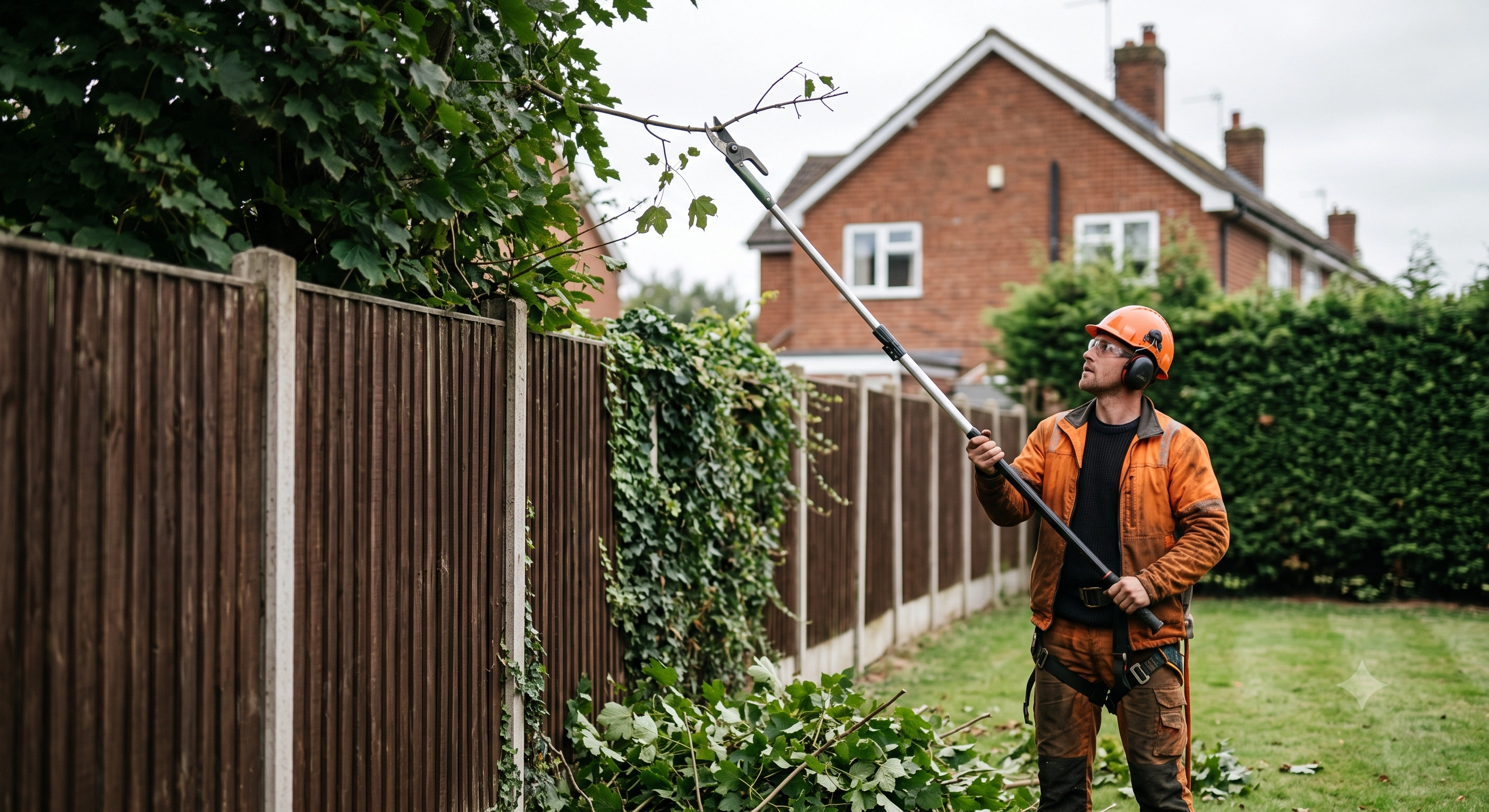
A homeowner in Surrey discovered in February 2026 that the mature oak behind her property was protected by a Tree Preservation Order—only after she had hired a contractor to remove it. The local council served an enforcement notice within three days, and she now faces a fine of up to £20,000 plus mandatory replanting costs.
In the UK, you need a felling licence from the Forestry Commission to cut down most trees. Private gardens are exempt—but Tree Preservation Orders and conservation area rules override that exemption entirely. Cut a protected tree without permission and you risk unlimited fines on conviction.
Felling licence – a permit issued by the Forestry Commission under the Forestry Act that authorises the cutting down of trees above specified diameter or volume thresholds. The licence is required whether on commercial land, woodland, or farmland, though certain exemptions apply (Forestry Commission, 2025).
Tree Preservation Order (TPO) – a legal protection placed on specific trees or groups of trees by a local planning authority under the Town and Country Planning Act 1990. Once a TPO is in force, it is a criminal offence to cut down, top, lop, uproot, or deliberately damage the tree without the council's written consent.
Conservation area – a designated area of special architectural or historic interest, where local authorities have additional powers to control development and protect the character of the environment. Trees in conservation areas require six weeks' written notice to the council before any cutting, even if no TPO exists (Town and Country Planning Act 1990, Section 211).
Key Takeaways
- Felling licences are not required for trees in private gardens, churchyards, or public open spaces—but Tree Preservation Orders override this exemption.
- You may fell up to 5 cubic metres of timber per calendar quarter without a licence. Selling the wood? The threshold drops to 2 cubic metres.
- Trees below 8cm diameter at 1.3m height (chest-height measurement) escape licensing requirements.
- Cutting a protected tree without consent brings £20,000 maximum fines in magistrates' court and unlimited fines on indictment, plus you must plant a replacement.
- You have 28 days to appeal a newly made Tree Preservation Order to the Planning Inspectorate.
Do I Need a Felling Licence to Cut Down a Tree in the UK?
Under the Forestry Act, most trees in Great Britain require a felling licence from the Forestry Commission before removal. But there are gaps in that rule. Private gardens, churchyards, and designated public open spaces are exempt regardless of tree size. Beyond gardens, you may fell trees below 8cm diameter at 1.3m height—the standard chest-height measurement foresters use—without permission. You're also allowed to fell up to 5 cubic metres of timber per calendar quarter on any land without seeking approval.
Planning to sell timber or firewood? The volume exemption shrinks to 2 cubic metres per quarter. The Forestry Commission measures this as cubic metres over bark, not by weight or tree count. A mature oak typically yields 3 to 5 cubic metres, so you'll exceed the threshold quickly when felling larger specimens. Know this before you start work.
The garden exemption covers most homeowners. The Forestry Commission defines a "garden" as land immediately surrounding a dwelling used for domestic purposes—ornamental gardens, lawns, patios. Larger rural estates with paddocks, orchards, or outlying woodland fall outside the domestic curtilage and require a licence.
| Category | Licence Required? | Volume / Diameter Limit |
|---|---|---|
| Private garden trees | No | No limit (unless TPO or conservation area applies) |
| Trees <8cm diameter at 1.3m | No | Any volume |
| General felling (not for sale) | No (if below threshold) | Up to 5m³ per calendar quarter |
| Felling timber for sale | No (if below threshold) | Up to 2m³ per calendar quarter |
| Woodland / commercial land | Yes (above thresholds) | All volumes above 5m³ / 2m³ |
Before you hire a contractor: Always search whether a Tree Preservation Order or conservation area designation applies to your property. Those protections override the Forestry Act exemptions completely.
What Happens If I Cut Down a Tree Without a Licence?
Felling trees without a licence where one is required is a criminal offence under the Forestry Act. The Forestry Commission can issue Restocking Notices forcing you to replant equivalent trees at your own expense and may prosecute for unlawful felling. Penalties include fines and, in serious cases, site restoration orders. Here's what catches people: if both a licence breach and a TPO breach occurred, you face two separate sets of proceedings.
How does enforcement happen? The Forestry Commission learns of unlicensed felling through public complaints, aerial surveillance, or site inspections. Once notified, enforcement officers calculate volume and check whether exemptions apply. If you exceeded the quarterly threshold or felled trees outside the garden curtilage without permission, expect a formal investigation.
What Is a Tree Preservation Order and How Does It Affect Tree Cutting?
A Tree Preservation Order (TPO) is a legal tool made by a local planning authority under the Town and Country Planning Act 1990 to protect specific trees, groups, or woodlands that contribute to an area's amenity. Once confirmed, cutting down, topping, lopping, uprooting, or wilfully damaging the tree without written council consent becomes a criminal offence. The protection follows the tree itself—it continues even if the property changes hands.
Why do councils make TPOs? They judge the tree makes significant contribution to local landscape, townscape, or environment. The tree must be visible from public vantage and carry sufficient public amenity value. Orders can cover individual specimens, groups, entire tree lines, or areas of woodland. Councils must notify the landowner and interested parties when making an order. It takes effect immediately, even before formal confirmation.
Penalties are severe. Summary conviction in magistrates' court brings fines up to £20,000; Crown Court conviction carries unlimited fines. Courts may also order you to replant trees of appropriate size and species. In 2025, courts imposed several five-figure penalties on developers who removed protected trees to clear building sites. This isn't a minor administrative matter.
Need to work on a TPO tree? Apply for consent to the local planning authority—it's free. The council weighs amenity value, arboricultural need, and alternatives. Consent may come with conditions (replacement planting, specific pruning techniques) and time limits for completing the work.
How Do I Find Out If a Tree Has a Tree Preservation Order?
Every local planning authority keeps a public register of Tree Preservation Orders. Search online via the council's planning portal or visit the planning office in person. Many councils now publish interactive maps showing TPO locations overlaid on property boundaries. Searches cost nothing, though request a formal register extract if you need written confirmation for conveyancing or legal purposes.
When buying property, conveyancing solicitors routinely search for TPOs as part of local authority enquiries. The search reveals whether any trees on or near the property are protected. Sellers must disclose known TPOs legally, but councils rarely notify individual homeowners when orders are made—especially older ones predating current ownership.
Mature, prominent trees in residential areas or conservation zones often carry TPOs. But many protected trees show no physical marker. Appearance alone is unreliable. Always conduct a formal search before planning any tree work.
Can I Appeal a Tree Preservation Order on My Property?
You have 28 days from the date the council makes the TPO to lodge an objection or representation. Submit these directly to the local planning authority, which must consider all representations before confirming the order. Common grounds include: the tree contributes little to public amenity; the order is overly restrictive given condition or location; or factual errors in the order (wrong species, tree identification).
If the council confirms despite your objection, you cannot appeal the confirmation itself. There is no right of appeal to the Planning Inspectorate against making a TPO. But if the council later refuses consent to work on the protected tree, you may appeal that decision to the Planning Inspectorate. Appeals must be lodged within specific time limits (typically 28 days for householder applications) and are determined by an appointed planning inspector using written evidence or, occasionally, a hearing.
Successful appeals usually rest on clear arboricultural justification—evidence the tree is dead, dying, dangerous, or causing actionable damage—or proof that refusal was unreasonable given the tree's actual amenity contribution.
What Are the Rules for Cutting Trees in Conservation Areas?
Conservation areas are designated under the Town and Country Planning Act 1990 to preserve areas of special architectural or historic interest. Trees within conservation areas receive automatic legal protection even without a Tree Preservation Order. Before cutting down, topping, or lopping any tree in a conservation area, you must give the local authority six weeks' written notice using the formal conservation area notice procedure outlined in Section 211 of the Act.
Your notice must describe the proposed work and identify which trees will be affected. During the six-week period, the council may decide to place a formal TPO on the tree—at which point you'll need to apply for consent before proceeding. If the council takes no action within six weeks, you can go ahead as described. This requirement doesn't apply to trees below 75mm diameter (measured at 1.5m height), nor to urgent work on dead, dying, or dangerous trees.
Here's the practical implication: if you submit notice on January 15th, you're looking at early April before you get the all-clear. Plan your contractor bookings and budget accordingly. Local authorities use this window to assess whether trees deserve formal TPO protection. The conservation area notice functions as an early-warning system, letting councils step in before valuable amenity trees disappear. Skipping the notice requirement is a criminal offence, punishable by fine.
| Protection Type | Application Required? | Notice Period | Penalty for Breach |
|---|---|---|---|
| Tree Preservation Order | Yes (written consent) | 8 weeks for decision | Up to £20,000 summary; unlimited on indictment |
| Conservation area tree | Six weeks' written notice | Six weeks | Fine (no statutory maximum) |
| No protection | Only if felling licence applies | None (unless Forestry Act triggered) | Restocking notice; fine under Forestry Act |
Takeaway: Conservation area controls kick in automatically for all trees above the diameter threshold—even without a formal order. Always check with your local planning authority before booking the tree surgeon.
Do Conservation Area Rules Apply to Small Trees or Pruning?
Only trees exceeding 75mm diameter (measured at 1.5m above ground) trigger notice requirements in conservation areas. Trees below this threshold can be felled or pruned without notice, though they may still be subject to TPOs or wildlife protections. Minor pruning—removing small-diameter branches or crown-lifting below threshold—usually escapes notice, but the law blurs on what counts as "topping" or "lopping" in edge cases.
Dead, dying, or dangerous trees move faster. You can give five days' notice instead of six weeks when felling a dangerous tree, provided you back it up with solid evidence: a qualified arborist's report or photographs showing the hazard. The council may inspect and might refuse if they disagree with your assessment, so document everything and keep it accessible.
When Is It Legal to Cut Overhanging Branches from a Neighbour's Tree?
Common law gives you the right to cut back branches or roots crossing your boundary—as long as you cut only to the property line and don't trespass onto your neighbour's land to do it. This principle has stood for centuries and applies across England, Wales, Scotland, and Northern Ireland. The cut material remains your neighbour's property by law, though most people agree you can bin small prunings.
That said, you're not exempt from TPO or conservation area rules just because branches overhang your side. If the neighbour's tree sits under a TPO, cutting without council consent is criminal—even at your boundary. Same with conservation area trees: six weeks' notice applies. Many homeowners wrongly assume boundary rights trump statutory protections. They don't.
You also face civil liability if your pruning damages the tree. Aggressive cutting or poor timing can weaken or kill it, and your neighbour can sue for lost property value or replacement costs. Courts have awarded substantial damages where pruning destroyed a mature tree. Always hire a qualified tree surgeon and, for large or valuable trees, get your neighbour's written agreement before you start.
Am I Responsible If My Tree Damages a Neighbour's Property?
Tree owners have a duty of care to prevent foreseeable damage. A fallen branch on their car, or subsidence from roots drawing moisture from clay soil—you may be liable in nuisance or negligence if you knew (or should have known) of the risk and did nothing. Liability hinges on foreseeability and whether you acted reasonably.
Insurance typically covers tree damage, but wording matters. Subsidence claims get messy: they involve root activity, soil type, and ground movement history. If a neighbour alleges your tree is risky, get a professional survey fast. Ignoring the warning signals makes foreseeability obvious if they sue later.
What Wildlife Protections Apply When Cutting Trees in the UK?
The Wildlife and Countryside Act 1981 makes it illegal to intentionally or recklessly destroy an active bird nest or one being built. Bird nesting season runs March through August, and tree felling or heavy pruning during this window carries serious risk. Penalties: fines up to £5,000 per offence, or imprisonment in serious cases. Schedule 1 species—barn owls, goshawks—get year-round protection with enhanced penalties.
Bats and their roosts are protected under the Wildlife and Countryside Act 1981 and the Conservation of Habitats and Species Regulations 2017. Every bat species is a European Protected Species. Damaging or destroying a bat roost is illegal year-round, whether bats occupy it or not. Trees with cavities, loose bark, or old woodpecker holes may shelter bats. Suspected or confirmed bat presence means you need a Natural England licence before touching the tree. Unlicensed work risks fines of up to £5,000 per bat and up to six months in prison.
Professional arborists run Preliminary Roost Assessments (PRAs) before felling trees with bat potential. Moderate or high potential triggers emergence surveys (May to September). Getting a bat mitigation licence from Natural England takes months—budget for this in your project timeline.
What Time of Year Can I Legally Cut Down Trees to Avoid Harming Wildlife?
October through February is safest—outside main nesting season and during low bat activity. But year-round roost protection means bat surveys and licences stay necessary if roost features exist, whatever the season. Woodpigeons nest outside traditional months, so always inspect immediately before starting work.
Genuine safety emergencies during nesting season require careful handling. Inspect for active nests right before you begin. If one exists, stop and either wait for fledging or contact Natural England or the RSPCA. Keep photographs and professional reports; you'll need them if questions arise later.
What Exemptions Exist for Cutting Dead, Dangerous, or Diseased Trees?
Genuinely dead trees escape felling licences, TPO controls, and conservation area notice—but only if they're actually dead. Dead means no living tissue capable of producing leaves. Partially dead trees or those with dead wood but live crown remain protected. Councils challenge deadness claims often, especially when stumps vanish or photos are missing, so photograph and document thoroughly before you fell.
Dangerous trees get faster procedures but not exemptions. For TPO trees, you can do urgent safety work without prior consent, then notify the council in writing as soon as practicable afterward. Include photos, an arborist's report, and your reasons for urgency. Conservation area dangerous trees qualify for five days' notice instead of six weeks—but only if you can prove the danger convincingly.
Diseased trees depend on the disease, how fast it spreads, and whether treatment works. Ash Dieback has prompted many councils to grant TPO consent for infected ash removal, especially where public safety matters. Disease alone doesn't permit cutting without consent though. Councils keep discretion and may demand independent verification or require monitoring instead of felling.
Replanting obligations follow even exempted work. Councils may require suitable replacement species, particularly where amenity value is high. Ignore replanting conditions and enforcement action—plus extra fines—follow.
Planning tree work?
Find a qualified local tree surgeon
Permissions, TPOs and safe cutting are best handled by a professional. We connect UK homeowners with vetted, insured tree surgeons in their area.
Frequently Asked Questions About Tree Cutting in the UK
Can I cut down trees on my own land without permission?
Your garden is yours—but the law has a few catches. You can fell trees in your private garden without a felling licence, yet a Tree Preservation Order or conservation area status changes everything. If either applies, you need written consent first. Skip this step, and you're facing significant fines and legal penalties that can derail future property sales or development plans.
How much does a felling licence cost?
The Forestry Commission charges no application fee for a standard felling licence. That said, complexity drives cost. If your licence requires an Environmental Impact Assessment or involves detailed forestry plans, expect to pay for surveys, specialist reports, and professional advice to support the application. Processing takes 6 to 12 weeks—longer if the assessor flags concerns—so budget time as well as money if you're working toward a deadline.
Do I need permission to trim or prune a tree, or only to fell it?
Tree Preservation Orders are strict about this. Topping, lopping, uprooting, or deliberately damaging a protected tree demands written consent—which includes any significant pruning. What counts as "minor"? Removing deadwood or light crown-thinning might slip through, but councils err on the side of caution. The safest move: apply for consent if the work will materially change how the tree looks or stands.
What is the penalty for cutting down a protected tree?
A fine of up to £20,000 awaits in a magistrates' court. Take it to Crown Court on indictment, and fines become unlimited. Courts routinely order replacement planting—trees of appropriate species and size that you must pay for and establish. Repeat offenders face steeper penalties, and a criminal conviction shows up on standard background checks, which can affect employment, insurance, or professional licenses.
Can the council force me to cut down a tree?
Councils have narrow powers here. They can serve notice under the Highways Act 1980 if a tree blocks the public highway, or under the Local Government (Miscellaneous Provisions) Act 1976 if it poses an immediate danger. High Hedges legislation (Anti-social Behaviour Act 2003) is separate and applies only to evergreen hedges over two metres tall—not individual trees. A healthy tree on aesthetic grounds alone? Councils cannot force removal for that reason.
Do felling licence rules apply in Scotland, Wales, and Northern Ireland?
Yes, with administration divided by border. The Forestry Act covers Great Britain (England, Scotland, Wales), but each nation runs its own licensing. Scottish Forestry handles Scotland. Natural Resources Wales oversees Wales. The Forestry Commission manages England. Northern Ireland follows separate legislation—the Forestry Act (Northern Ireland) 2010—and issues licences through the Department of Agriculture, Environment and Rural Affairs. Garden exemptions, volume thresholds, and diameter limits operate similarly across jurisdictions, but always confirm specific rules with your local authority before starting work.