Tree surgeon insurance rests on three core pillars: public liability cover (£6–10 million minimum for residential contracts), employers' liability (legally mandatory once you hire staff), and optional professional indemnity for consultancy work. UK tree surgery insurance averaged £1,700 in 2025 according to Arborisk data, though self-employed sole traders with clean records often secure cover from £650 annually. This guide explains what you actually need, what it costs in 2026, and exactly which documents insurers will ask for when you apply.
Public liability insurance – a policy that covers third-party property damage and personal injury claims arising from your tree surgery work, including incidents involving clients, neighbours, and members of the public harmed by falling branches, equipment malfunction, or site access hazards.
Key Takeaways
- Public liability insurance isn't legally required for self-employed UK tree surgeons, but the Arboricultural Association mandates it for professional membership, and most local councils, estate managers, and commercial clients refuse to contract uninsured arborists.
- Employers' liability becomes mandatory under the Employers' Liability (Compulsory Insurance) Act 1969 the moment you hire your first employee or subcontractor working under your supervision. Missing this deadline can cost you £2,500 per day in fines.
- 2025 premiums ranged from £650 to £1,700 annually depending on turnover, staff count, services offered, and claims history (Arborisk). A single claim can spike your next premium by 25–40%.
- Specialist arboricultural insurers understand high-risk activities—chainsaw operation, working at height, stump grinding—and offer 10–20% discounts for NPTC qualifications, ISA certification, or documented safety training.
- Standard policies typically exclude intentional damage, work breaching tree preservation orders or planning requirements, and utility strikes unless you purchase specific add-on cover.
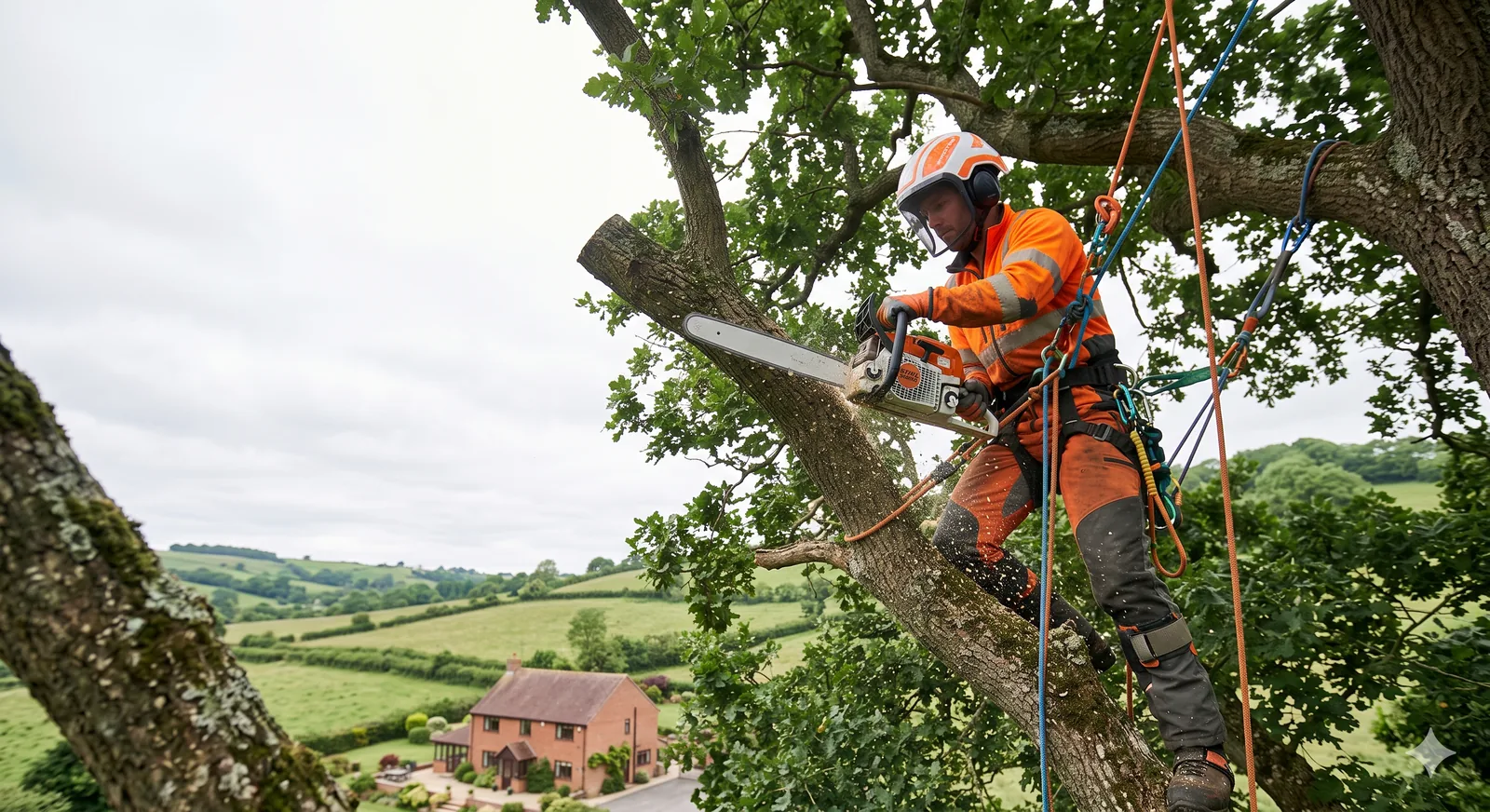
What Type of Insurance Do Tree Surgeons Actually Need?
Self-employed? You need public liability. Hire staff? Add employers' liability immediately. Public liability protects you when your work injures someone else or damages their property—a passer-by struck by a falling branch, a client's greenhouse smashed by your wood chipper, a neighbour's car dented by debris. The Arboricultural Association mandates it for all professional members. More importantly, local authorities, housing associations, and commercial estate managers won't sign contracts with uninsured contractors, which means you're excluding yourself from the steadiest income streams in the industry.
Employers' liability kicks in the moment you hire anyone. Apprentices, seasonal labourers, subcontractors working under your supervision—they all trigger the legal requirement. The Employers' Liability (Compulsory Insurance) Act 1969 demands a minimum of £5 million cover (most policies default to £10 million). This covers compensation and legal costs if an employee gets injured on site—a climber falling from a canopy, a ground worker struck by a log, repetitive strain from prolonged chainsaw work. Ignore this requirement and you're liable for fines of up to £2,500 per day. That's £50,000 in two weeks.
Professional indemnity is optional but worth considering if you write reports, advise on tree preservation orders, or assess structural defects. It protects you against claims that your professional judgment failed—recommending a client keep a tree that later fails and causes damage, or wrongly certifying a tree as safe when defects existed. Add £200–400 annually for this cover.
Do I Need Public Liability Insurance as a Self-Employed Tree Surgeon?
The law doesn't force it. But operating without public liability exposes you to unlimited personal liability. A single incident—severing a telecoms cable, damaging a listed building's masonry, injuring someone—can generate claims exceeding £50,000. Most professional clients require at least £6 million cover as a contract condition. Without it, you exclude yourself from councils, the National Trust, commercial property managers, and estate agents. You're left bidding only for private homeowner work, which typically pays less and comes without repeat contracts.
Industry membership also demands it. The Arboricultural Association, Trust Mark, and Checkatrade all require public liability insurance as a condition of registration. Drop it and you drop your professional standing.
What's the Difference Between Public Liability and Employers' Liability Insurance?
Public liability covers harm to other people and their property—clients, neighbours, pedestrians, vehicles, buildings, utilities. Employers' liability covers harm to your own staff—employees injured while working, including illnesses from unsafe conditions, inadequate training, or faulty equipment. The law requires £5 million employers' liability minimum; most policies run to £10 million.
Here's the critical bit: public liability does not cover your own injuries if you're self-employed. Fall from a tree while working alone? Neither policy pays for medical costs or lost income. Self-employed arborists should consider personal accident insurance or income protection to cover periods when you can't work.
How Much Does Tree Surgeon Insurance Cost and What Affects Pricing?
Premiums span £650 to over £2,000 annually. Arborisk data from 2025 put the average at £1,700 for mid-sized operations with two to three employees and turnover between £50,000–£150,000. Solo traders earning under £30,000 with no claims often pay £650 for basic public liability cover.
Your annual turnover drives pricing more than anything else. Insurers see revenue as a proxy for risk—more jobs means more chances of a claim. A sole trader at £25,000 might pay £700 for £6 million cover; a limited company turning over £250,000 with five staff could pay £2,200 for the same limit plus employers' liability.
What you actually do on site matters significantly. Standard pruning and crown reduction are baseline. High-risk work carries surcharges: stump grinding adds 15–30% (third-party damage risk), work near overhead power lines adds more (catastrophic injury potential), large-scale commercial felling increases exposure, emergency storm work creates even higher risk due to compressed timelines and reduced safety margins.
| Business Profile | Turnover | Staff | Typical Annual Premium (2025) |
|---|---|---|---|
| Self-employed sole trader, basic tree surgery only | £20,000–£40,000 | 0 | £650–£900 |
| Sole trader with subcontractor, stump grinding included | £40,000–£80,000 | 0–1 | £950–£1,400 |
| Limited company, standard arboricultural services | £100,000–£200,000 | 2–4 | £1,500–£2,100 |
| Established business, high-risk work (power lines, commercial contracts) | £200,000+ | 5+ | £2,200–£3,500+ |
Claims history directly controls renewal costs. One settled claim at £15,000 can spike your next premium by 25–40%. Multiple claims within three years may render you uninsurable with standard providers, forcing you into specialist high-risk markets where premiums double or triple. Conversely, five claim-free years usually qualify you for 10–15% no-claims discounts.
Why Do Some Tree Surgeons Pay More for Insurance Than Others?
Urban location drives premiums up. Greater London, Birmingham, Manchester operators pay more than rural counterparts because building density increases third-party damage likelihood. Underwriters also factor property values—areas with expensive homes and cars generate larger claims, which they price into premiums.
Your qualifications reduce risk in insurers' eyes. NPTC certificates in chainsaw maintenance, aerial tree work, or chipper operation cut premiums by 10–15%. ISA certification, first aid, documented safety systems—all signal lower risk. Membership in the Arboricultural Association or Approved Contractor status can unlock discounts.
Can I Reduce My Tree Surgery Insurance Premiums?
Raise your excess. Standard excesses run £250–500; pushing it to £1,000 or £2,500 cuts premiums by 8–12%. Only do this if you can actually pay the excess when a claim hits.
Bundle policies. Combining public liability, employers' liability, tools cover, and professional indemnity with one insurer saves 10–20% versus buying separately. Annual payment instead of monthly instalments saves another 5–8% because you eliminate credit finance costs.
Documented health and safety procedures—risk assessments tailored to each job type, method statements, equipment maintenance logs, staff training records—demonstrate to insurers that you take risk seriously. Specialist arboricultural underwriters actively request these documents during underwriting and reward robust safety cultures with measurably lower premiums. Here's why this matters: a business with comprehensive maintenance records for chainsaws and climbing equipment signals professionalism to claims assessors, reducing the likelihood they'll dispute a claim by arguing you neglected upkeep.
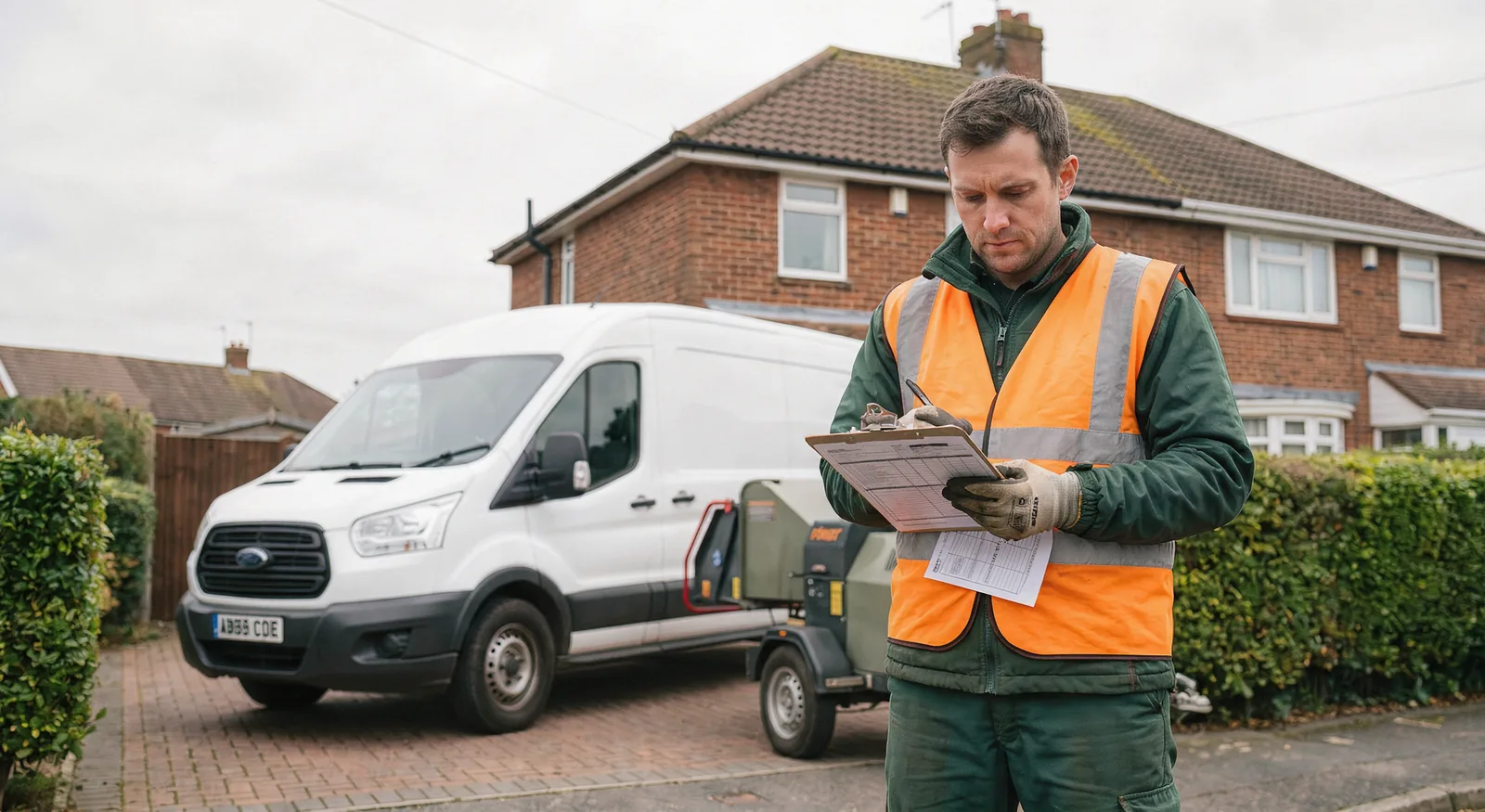
Which Insurance Provider Specialises in Arborist and Tree Surgery Coverage?
Specialist arboricultural insurers exist because generic commercial insurers don't understand tree surgery risks. They underwrite policies with industry-specific terms that high-street brokers typically exclude or, worse, misinterpret. Arborisk, Towergate, and R Collins & Co focus exclusively on forestry and arboricultural trades. Their underwriters actually know LOLER (Lifting Operations and Lifting Equipment Regulations), working at height legislation, and chainsaw liability nuances.
What you gain from this specialisation: tailored policy extensions that generic brokers simply don't offer. We're talking cover for work involving protected trees (subject to valid consent), emergency storm response call-outs, and operations near overhead power lines with appropriate safety protocols already factored into the terms. They also recognise industry qualifications—NPTC, LANTRA, City & Guilds NPTC—and adjust premiums accordingly. A generalist broker treats all manual trades identically, which means you might overpay.
Claims processing speed is where specialisation really shows. When a complex liability question arises—was the tree structurally unsound before you started work, or did that dropped branch constitute reasonable operational risk?—a specialist assessor grasps the technical context immediately. Generalist providers often create delays and disputes by asking questions that reveal they don't understand what a "codominant leader" is or why failure modes differ between oak and ash.
Do I Need Specific Arborist Qualifications to Get Insured?
Qualifications are not a legal absolute requirement for public liability cover. That said, nearly all specialist underwriters require proof of competence for high-risk activities. NPTC certification in chainsaw maintenance, cross-cutting, felling trees up to 380mm, and aerial tree rigging are non-negotiable if you climb or fell. Skip this step and insurers either exclude aerial work and felling entirely or load your premium by 40–60%.
Employers' liability underwriting tightens significantly once staff enter the picture. Insurers demand evidence that all climbing operatives hold CS38 (climb a tree and perform aerial rescue), CS39 (use a chainsaw from a rope and harness), and relevant rigging qualifications. Ground staff operating chippers need CS38 (chipper operation). Supervisors must demonstrate supervisory competence. The consequence of poor documentation here is serious: absence of training records can void your entire employees' coverage in the event of an injury claim.
First aid certification increasingly influences both policy acceptance and premium. Many arboricultural insurers now expect at least one team member on every job to hold a valid HSE-approved first aid at work certificate, particularly for remote or high-risk sites. Providing evidence during application can reduce premiums by 5–10% and considerably strengthens your position if a claim does arise, since it proves you've met Health and Safety Executive expectations.
What Does Tree Surgery Insurance Actually Cover (and What It Doesn't)?
Public liability insurance covers the legal costs and compensation payments when your tree surgery operations accidentally injure a third party or damage their property. In practice: a trunk section falls onto a client's conservatory during sectional dismantling. Wood chip ricochets and shatters a neighbour's window. A pedestrian trips over your traffic cones and fractures an ankle. Your vehicle reverses and clips a garden wall. The policy pays repairs, medical costs, and legal defence fees if someone sues. Your limit—typically £6–10 million—is the ceiling.
Employers' liability covers compensation and legal costs when an employee is injured while working for you. Falls from height, chainsaw cuts, crush injuries from falling timber, hearing damage from prolonged noise, hand-arm vibration syndrome (HAVS) from repeated chainsaw use—the policy responds whether injury stems from your negligence (inadequate training, faulty equipment) or an unavoidable accident during safely conducted operations.
Professional indemnity insurance covers claims alleging that your professional advice or survey work was negligent or incorrect. You complete a tree condition report certifying a tree as safe. It subsequently fails and damages property. The affected party claims you failed to identify defects. Or you advise a client that a tree preservation order doesn't apply, they fell without consent, and face regulatory fines—they pursue you for reimbursement. Professional indemnity covers your defence and compensation.
"Standard public liability policies exclude damage to the property you're actively working on unless you purchase 'damage to property worked upon' cover—an extension that fewer than 40% of sole traders hold, yet accounts for nearly 25% of tree surgery claims." (Arborisk claims data, 2025)
Does Tree Surgery Insurance Cover Equipment Damage or Loss?
Public liability and employers' liability do not cover damage to or theft of your own tools and equipment. Chainsaw stolen from your van? Chipper breaks down? Climbing harness damaged in an accident? Those losses sit outside liability cover entirely. You need separate tools and equipment insurance—sometimes called "all risks" cover—for chainsaws, climbing gear, chippers, stump grinders, vehicles, and trailers.
Most tools policies offer "new for old" replacement up to a specified total value, commonly £10,000 to £50,000 depending on business size. Expect to pay £150–400 annually. They typically cover theft from locked vehicles overnight, accidental damage during use, and breakdown (assuming you've maintained records), but exclude wear and tear, gradual deterioration, and unattended or unlocked-site losses.
What Happens If a Customer Is Injured During a Tree Job I Performed?
Your public liability insurance responds. Notify your insurer immediately—most policies demand notification within 48–72 hours of becoming aware of the incident, even if no formal claim exists yet. Delaying this notification can forfeit coverage. Call the claims line, provide your policy number, and describe what happened factually. Don't speculate on fault.
An appointed claims handler investigates: Did injury result from negligent acts or omissions on your part, or was it unavoidable? Were safety measures properly in place—barriers, signage, exclusion zones? Was the injured party where they belonged, or did they ignore warnings? The insurer covers your legal defence costs regardless of fault. If liability is established, they pay compensation and costs up to your policy limit.
Critical rule: never admit fault at the scene or in writing. Saying "I'm sorry this happened" is human and fine; saying "It's my fault, I should have secured that branch" can permanently damage your insurer's defence position. Document everything instead. Photographs, witness names, weather and site conditions, post-incident equipment state—preserve it all until your insurer's investigator examines it.
How Do You Get Insured as a Tree Surgeon (Step-by-Step Process)?
Start by gathering accurate business information before contacting insurers or brokers. Prepare your annual turnover (or projected turnover for new businesses), the number of employees or subcontractors you engage, a full service list (tree pruning, felling, stump grinding, consultancy, emergency work), and equipment details. You'll need your business structure—sole trader, partnership, limited company—and Companies House registration number if applicable.
Compile evidence of your professional qualifications next. Insurers want copies of NPTC certificates, ISA credentials, first aid certificates, and industry memberships (Arboricultural Association, Trust Mark). Prepare a summary of your health and safety procedures. Written risk assessments for each job? Equipment service logs? Method statements for high-risk tasks? Documented safety management demonstrably reduces perceived risk and often secures lower premiums.
Declare your full claims history for the past five years, including claims made against previous policies even after changing insurers. This is where many businesses stumble. Non-disclosure of past claims is the most common reason insurers void policies retrospectively, leaving you personally liable for claims you believed were covered. A single historic claim doesn't disqualify you; concealing it absolutely does.
Request quotes from at least three insurers or brokers. Specialist arboricultural brokers within the Arboricultural Association's approved network understand industry-specific risks and access markets unavailable to high-street comparison sites. When comparing quotes, ensure equivalence: identical public liability limits (£6 million versus £10 million), identical employers' liability limits, identical policy excesses, and identical extensions (damage to property worked upon, tools cover, legal expenses). A £200 difference between non-equivalent policies means nothing.
Read the exclusions section of each policy carefully before purchasing. Standard exclusions: work under the influence of alcohol or drugs, deliberate or reckless acts, fines and penalties imposed by regulators, and liability assumed under contract that wouldn't exist at common law. Some policies exclude work on preservation-order trees unless you provide valid consent evidence. Others exclude coastal or waterside work unless specifically declared during underwriting.
What Should You Look for in a Tree Surgery Insurance Policy?
Your public liability cover limit is the maximum your insurer will pay for any single claim. This includes legal defence costs, compensation, and associated expenses rolled together. For residential work, £6 million is the industry minimum and satisfies most local council and commercial client requirements. Here's the practical consequence: if you're targeting those contracts, you'll need to tick that box before pitching. That said, contracts with local authorities, the National Trust, housing associations, or blue-chip estate managers increasingly demand £10 million as a non-negotiable condition. Before choosing a limit, map out who you actually want to work for—upgrading from £6 million to £10 million typically costs only £80–150 extra per year, so the financial barrier is minimal.
Seasonal or project-based work changes what makes sense on paper. Annual policies cover you year-round regardless of whether you're actively in the field, which works well for full-time operators but wastes money if you're part-time and only working spring through summer. Some specialist insurers offer seasonal cover (March–October, say) at reduced premiums, or project-based policies tied to individual high-value contracts. The catch: gaps in cover signal risk to future insurers. When you later try to get continuous annual coverage, they see those lapses and either decline you or charge significantly more. One season without insurance can haunt your underwriting history for years.
Legal expenses cover is an optional add-on that funds your own legal costs for contractual disputes, debt recovery, and employment tribunal defence. Suppose a client refuses to pay for work you've completed and you need to pursue a county court claim—legal expenses cover pays your solicitor's fees, typically up to £100,000. This extension costs roughly £50–100 annually. It's genuinely worth buying if you regularly work on commercial contracts, where payment disputes happen more often than on residential jobs.
What's a Reasonable Public Liability Insurance Limit for Tree Surgeons?
The right limit depends on your client profile and their contractual demands, not some industry standard handed down from above. Working for homeowners, residential landlords, or small estates? £6 million public liability satisfies nearly all of them and provides ample headroom for catastrophic claims. Claims exceeding £6 million in tree surgery are vanishingly rare and typically require multiple serious injuries or destruction of a listed building.
Commercial and public-sector work tells a different story. Local councils, housing associations, academy trusts, and the National Trust routinely specify £10 million as a tender condition. If you want those contracts, buying £10 million from the start avoids the administrative hassle of upgrading mid-term. The premium difference is negligible—usually 8–15%—making the higher limit genuinely cost-effective for anyone serious about commercial work.
Can I Get Temporary or Project-Based Insurance Instead of Annual Cover?
Temporary or short-term cover exists, but it's less common and usually more expensive per day than annual policies. Specialist insurers occasionally write project-based policies for one-off high-value contracts—a two-week commercial felling project, say—charging premiums based on contract value and duration. Per-day rates, though? They typically run 30–50% more expensive than equivalent annual cover when you annualise them.
Day-rate or weekly insurance is marketed primarily for non-professional operators—homeowners clearing their own land, or volunteers helping community woodland projects—and rarely suits professional tree surgeons trading as a business. Here's the underwriting reality: repeated short-term policies create coverage gaps that insurers flag as heightened risk. Result: higher premiums or outright declinations when you later apply for annual cover. For anyone trading as a tree surgeon more than a few weeks yearly, continuous annual cover is cheaper, simpler, and avoids future complications.
Spending on insurance but not on growth?
Get exclusive tree surgery leads — yours alone
Insurance protects your business. Leads grow it. We run Google and Meta campaigns for UK tree surgeons only — exclusive enquiries, never shared.
This article is published by an independent law firm for informational purposes only and does not represent or claim affiliation with any government body, international organisation, or official authority.
Frequently Asked Questions About Tree Surgeon Insurance
Is tree surgeon insurance mandatory by law?
Public liability insurance is not a legal requirement for self-employed tree surgeons in the UK. Employers' liability insurance, however, becomes legally mandatory under the Employers' Liability (Compulsory Insurance) Act 1969 the moment you hire staff or engage certain subcontractors. Miss this requirement and you're liable for £2,500 per day in fines. While public liability isn't legally compulsory, most professional clients, local councils, and commercial contracts will demand proof of at least £6 million cover before handing you work.
What if I'm injured during tree work – does my insurance cover me?
Public liability insurance protects third parties you harm, not yourself. As a self-employed tree surgeon, you're not covered if you're injured. Employers' liability covers employees injured while working for you, but not the business owner. Self-employed operators should consider personal accident insurance or income protection policies to cover medical costs, rehabilitation, and lost income during incapacity. Without this safety net, you absorb the full financial hit of injury-related expenses and lost earnings personally.
How often should I review and update my tree surgery insurance?
Review at renewal every year, and immediately whenever your business changes materially. Hiring your first employee? That triggers mandatory employers' liability. Adding stump grinding or work near power lines? Update your policy. Buying expensive new equipment or expanding into commercial contracts? Notify your insurer at once. Failure to disclose material changes voids your coverage, leaving you personally liable for claims you believed were insured.
Can I work without insurance while building my tree surgery business?
Legally, self-employed sole traders without employees can operate uninsured in the UK. It's a catastrophic business decision. One claim for property damage or injury could bankrupt you outright. Most reputable clients, all local councils, and professional bodies like the Arboricultural Association require proof of public liability before hiring you. Operating uninsured also locks you out of trade directories, professional networks, and high-value contracts—severely capping your growth.
Does tree surgery insurance cover damage I cause to utilities (electric lines, gas pipes)?
Standard policies often exclude or heavily restrict utility damage unless you buy specific extensions and follow documented safe working procedures. Before any job, request utility location plans from the client and contact providers (electricity, gas, water, telecoms) to mark cable and pipe routes. Some specialist arboricultural insurers offer utility strike cover as an optional add-on, but they'll require proof that you follow HSG47 (Health and Safety Executive guidance on avoiding danger from underground services).
What qualifications help reduce tree surgery insurance costs?
NPTC qualifications in chainsaw maintenance, aerial tree work, and chipper operation can cut premiums by 10–20% with specialist arboricultural insurers. ISA (International Society of Arboriculture) certification, Arboricultural Association Approved Contractor status, and documented first aid training signal professional competence and lower risk. A clean claims history over five consecutive years typically earns 10–15% no-claims discounts. Maintaining comprehensive safety records—risk assessments, method statements, equipment service logs—can reduce premiums further by demonstrating proactive risk management.