A Hertfordshire tree surgeon watched three rival companies win tenders for the same housing estate contract in January 2026. All three had launched websites and Google Business Profiles six months earlier. His own business still relied entirely on word-of-mouth referrals—and his calendar showed twelve blank days in February.
Tree surgeons who combine excellent arboricultural skills with systematic marketing consistently fill their schedules and command premium rates. Most qualified arborists struggle not because their work lacks quality, but because potential clients never discover them. This guide presents proven, cost-effective marketing strategies specifically designed for the UK tree surgery sector, addressing both residential and commercial client acquisition.
Tree surgeon marketing comprises the strategic activities an arboricultural business uses to attract, convert and retain clients—including digital presence (websites, search engine optimisation, social media), traditional outreach (vehicle branding, printed materials, partnerships), and reputation management (reviews, certifications, case studies).
Key Takeaways
- Local SEO delivers the highest ROI: 76% of people who search on their smartphone for something nearby visit a business within 24 hours (Google, 2025)
- Google Business Profile optimisation is non-negotiable—93% of UK tree surgery enquiries begin with a local Google search
- Visual content outperforms text by 4:1 for tree surgery businesses on social platforms
- Commercial contracts require ISA certification, £5–10 million public liability insurance, and systematic bid-response processes
- Marketing budget benchmarks: new businesses should allocate 12–15% of revenue; established firms 7–10%
Why Do Most Tree Surgeons Struggle to Get Consistent Work?
Three structural problems prevent skilled arborists from maintaining full calendars.
Seasonal demand fluctuation creates feast-or-famine cycles. Storm damage generates urgent work in autumn and winter, while spring pruning creates a different surge. Without advance marketing—planned months ahead—these peaks arrive when you lack capacity to serve them properly. You turn work away. Then troughs arrive and your crew sits idle.
Second: the trust gap. Tree work involves significant property risk, height safety, and often irreversible decisions about mature specimens. Homeowners and facilities managers default to businesses that demonstrate competence through visible credentials, documented previous projects, and third-party validation. An excellent climber with no online presence loses to an average contractor with 47 Google reviews. It shouldn't work that way—but it does.
Finally, price competition from unlicensed operators undermines professional positioning. When a homeowner receives quotes of £450, £850, and £1,200 for the same crown reduction, they lack the expertise to understand why rates differ so wildly. Without education-based marketing that explains insurance requirements, BS 3998 compliance, waste disposal obligations, and skill certification, the decision defaults to price alone—which means you're competing against someone cutting corners on safety and regulation.
What makes tree surgery marketing different from other trades?
Tree surgery sits at the intersection of emergency service, horticultural expertise, and aesthetic judgement. Unlike plumbing or electrical work, tree surgery is rarely routine. Clients purchase tree services perhaps once every 3–7 years. That means constant new client acquisition. Repeat business won't sustain you.
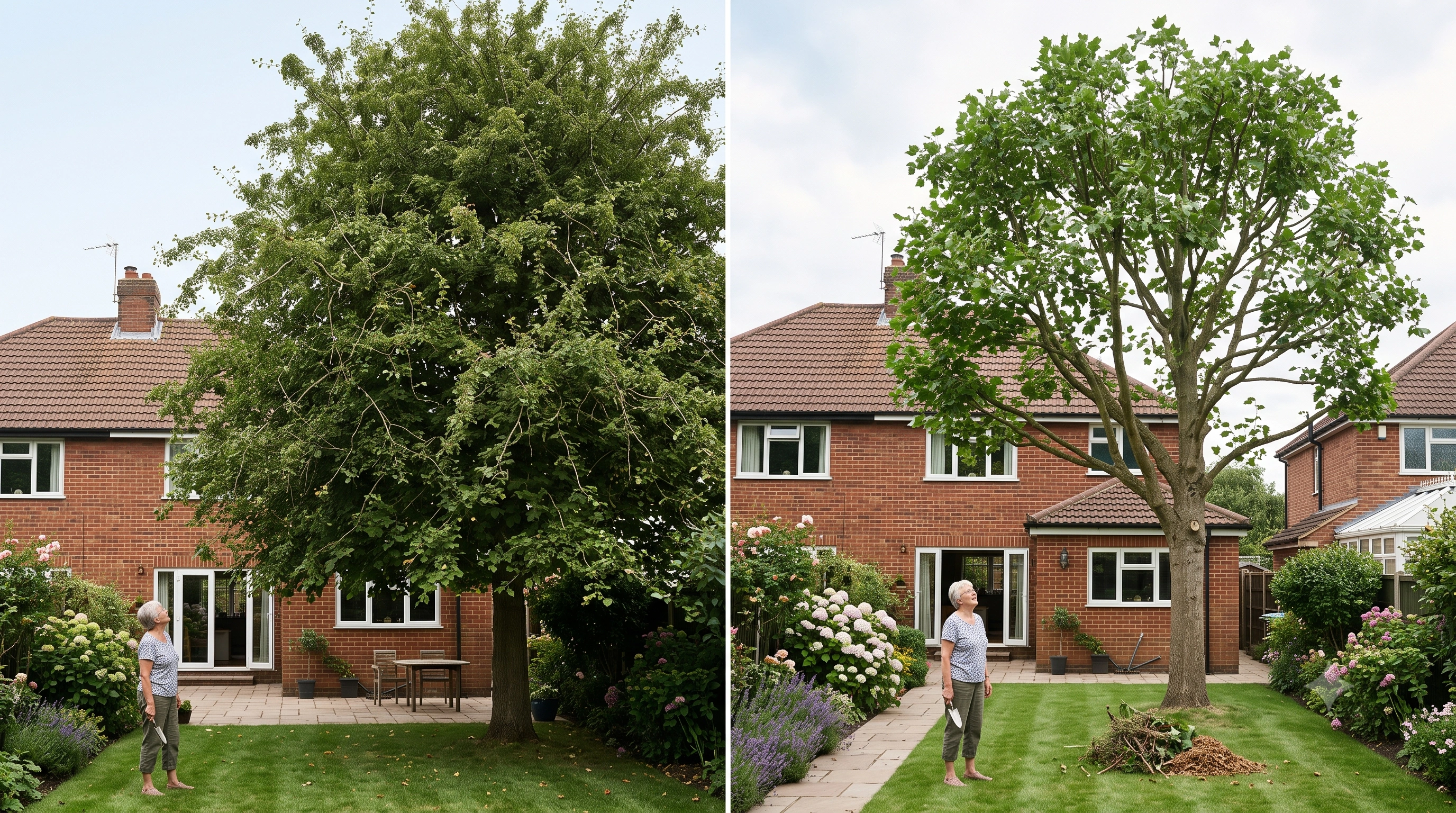
The visual transformation tree work delivers makes before-and-after content exceptionally powerful. A photograph of a dangerous leaning oak adjacent to a conservatory, followed by images of the systematic dismantling process, communicates competence more effectively than any written description. This visual nature favours Instagram, Facebook, and YouTube over text-heavy platforms.
Geography matters more than for other trades. A tree surgeon in Cornwall cannot easily serve a client in Yorkshire—travel time, accommodation costs, and regional rate differences make distant work uneconomical except for specialist projects. Marketing must target tightly defined service areas, typically 25–40 mile radii from your base. Spending budget on national visibility wastes money.
What Are the Most Cost-Effective Digital Marketing Strategies for Tree Surgeons?
Local search engine optimisation delivers measurable leads at lower cost than any other channel. When someone searches "tree surgeon near me" or "emergency tree removal Chester," Google displays a map with three local businesses—the Local Pack. Appearing there generates 126% more clicks than the first organic search result below it.
Start with your Google Business Profile. Claim and verify your listing, then complete every field: business hours (including emergency availability), service area boundaries, categories (select "Tree service" as primary, add "Arborist" and "Stump grinding service"), and a 750-character business description incorporating location terms and services. Upload 40–60 recent project photos tagged with descriptive filenames like "oak-crown-reduction-Bath-2026.jpg" rather than "IMG_4782.jpg." Poor filenames waste the ranking potential of your best visual assets.
Your website must answer three questions within eight seconds. Do you serve my area? Can you handle my specific problem? Are you legitimate? Structure your homepage with location in the H1 heading, a brief service list with emergency tree work prominent, and trust indicators (Arboricultural Association membership, insurance certification, British Standard compliance) visible without scrolling.
Create location-specific service pages for each town or district you serve. A page titled "Tree Surgeon in Tunbridge Wells" optimised with local landmarks, common tree species in that area (beech, oak, ash), and local planning considerations outranks a generic "Our Service Areas" list. Each page needs 400–600 words of unique content. Template text with only the town name swapped signals low effort to search engines and readers alike.
How do I rank my tree surgery business on Google?
On-page optimisation means structuring each website page so search engines understand its topic and relevance. Your title tag (the blue link in search results) should follow this formula: [Service] + [Location] + [Differentiator]. Example: "Emergency Tree Removal Oxford | 24-Hour Response | NPTC Certified." Keep it under 60 characters to prevent truncation.
Header tags (H1, H2, H3) must include location and service terms naturally. Your H1 might read "Professional Tree Surgery Services in Reading & Berkshire," while H2 subheadings address "Crown Reduction & Thinning," "Dangerous Tree Removal," "TPO Applications & Planning." These headers signal page structure to both users and search algorithms.
Every image needs descriptive alt text for accessibility and SEO. Write "tree surgeon dismantling large ash tree over residential property in Guildford" rather than blank or "tree work." Compress images to under 200KB each—page load speed directly affects rankings, and uncompressed photos from modern cameras often exceed 5MB. That delay costs you ranking positions.
Build citations: your business name, address, and phone number listed identically across online directories. Priority platforms include Yell.com, Checkatrade, Bark, MyBuilder, Trustpilot, and the Arboricultural Association contractor directory. Inconsistent information (different phone numbers or abbreviated street names) confuses search algorithms and weakens local ranking signals. Spend an afternoon verifying every directory entry.
Should tree surgeons invest in paid advertising or organic SEO first?
Google Ads delivers immediate visibility but stops the moment you pause spending. Organic SEO builds slowly but compounds over time. Your choice depends on where you are now.
New businesses with empty calendars benefit from Google Ads for emergency services and seasonal peaks. A campaign targeting "emergency tree removal [your area]" with ads appearing only for searches within 15 miles generates quote requests within hours. Cost per click ranges from £3.50–£8.00 for tree surgery terms in competitive markets; expect £400–£800 monthly for meaningful lead volume. But once summer arrives and emergencies drop, you're paying for visibility you don't need.
Established businesses with steady work should prioritise SEO investment. After 8–12 months of consistent optimisation, organic search delivers 60–70% of new enquiries at near-zero marginal cost. Allocate your first £1,500–£2,000 toward website development and initial SEO rather than paid ads that yield temporary results. Patience pays.
The hybrid model works best: dedicate 70% of your marketing budget to long-term SEO and content creation, reserve 30% for tactical paid campaigns during your slowest months or when you add a new crew and need rapid capacity fill.
How Can Tree Surgeons Use Social Media to Generate Leads?
Facebook remains the primary social platform for residential tree surgery leads in the UK. Its user demographic skews toward homeowners aged 35–65—precisely the group commissioning tree work. Join and actively participate in local community groups: "Spotted: [Town Name]," "[Area] Residents," "What's On in [Region]." When members post photos of concerning trees asking "Does anyone know a good tree surgeon?", respond helpfully with brief, educational answers rather than immediate sales pitches. The trust builds naturally.
Post 3–4 times weekly with varied content types. Project showcases with before-and-after photos perform consistently well; explain the technical challenge (proximity to property, decay patterns, TPO considerations) in plain language. Educational posts addressing common questions—"When is the best time to prune fruit trees?" or "Five signs your tree needs professional assessment"—demonstrate expertise and attract shares. This is how passive observers become active inquiries.
Instagram serves as your visual portfolio for both residential and younger commercial buyers. Time-lapse videos of complex dismantling work, especially dramatic lowering operations or crane-assisted removals, generate high engagement. Use location tags religiously: tag the nearest town or landmark in every post to appear in local explore feeds. Incorporate relevant hashtags: #TreeSurgeon, #Arborist, #TreeCare, plus location tags like #KentTreeSurgeon or #SurreyTreeWork.
LinkedIn matters less for residential work but proves valuable for commercial marketing. Facilities managers, estate managers, and local authority procurement officers use LinkedIn professionally. Share case studies of commercial projects, posts about British Standards compliance, updates when your team completes new NPTC qualifications, and thought leadership about duty-of-care obligations for tree owners under the Occupiers' Liability Act 1957.
What content should arborists post on social media?
Safety content separates professionals from cowboys. Post short videos of proper PPE, rigging techniques, or safety briefings—45 seconds showing your groundsman setting up exclusion zones and checking for overhead cables works well. To potential clients, this demonstrates the care they should expect. Implicitly, it asks: does their cheaper quote include this level of safety?
Seasonal advice establishes you as the local tree expert. February: optimal timing for fruit tree pruning. June: how to identify oak processionary moth. October: storm preparation and dangerous trees requiring urgent attention. End each post with a light call-to-action—"Concerned about any of your trees? Message us for a free visual assessment."
Behind-the-scenes team content humanises your business. Introduce team members. Celebrate newly qualified climbers. Show your workshop setup or the fleet before heading out. Potential clients hire people, not abstract companies. Seeing your actual crew builds familiarity and trust.
Never post prices publicly. Tree work pricing depends on access, tree condition, proximity hazards, and disposal requirements. A post saying "Oak removal £800" creates unrealistic expectations and attracts only price-focused enquiries. Instead, emphasise your free assessment and custom quotation process.
Which Traditional Marketing Methods Still Work for Tree Service Companies?
Vehicle branding converts your trucks and chippers into mobile advertisements. A clearly branded vehicle parked outside a job site generates 15–30 enquiries annually according to typical contractor experience. Use clean, readable typography: company name, primary phone number, website, and 2–3 core services. Avoid cluttered designs.
Magnetic signs work for personal vehicles used privately, though permanent vinyl wrapping projects greater professionalism. Include "Fully Insured" and relevant certifications (Arboricultural Association member logo, if applicable) to differentiate from uninsured operators. High-visibility yellow or green backgrounds stand out; ensure phone numbers are readable from 20 metres away.
Door hanger campaigns capitalise on immediate local awareness after completing a prominent job. Neighbours notice tree work—the noise, road closures, and dramatic transformation are unavoidable. Within 48 hours of finishing substantial work, distribute 50–100 door hangers within a quarter-mile radius. Include a photo of the just-completed job (with homeowner permission), brief service list, and a time-limited offer: "Your neighbours at [street name] just used our services—mention this hanger for £50 off projects over £500, valid until [30 days hence]."
Strategic partnerships multiply reach without advertising cost. Landscape gardeners, property maintenance companies, estate agents, and property management firms all encounter clients needing tree work but lack arboricultural expertise. Offer reciprocal referral arrangements or, for high-volume partners, a 10% referral fee. Provide business cards and a one-page capability sheet they can share.
How effective are door-to-door marketing and flyers for tree surgeons?
Response rates vary dramatically by targeting precision. Untargeted leaflet drops—2,000 generic flyers scattered randomly across a postcode—typically yield 0.05–0.15% response (1–3 enquiries per 1,000 flyers). At £40–£60 per thousand for design, printing, and distribution, cost per enquiry reaches £20–£60 before conversion rates. This means you're spending considerably to reach disinterested recipients.
Targeted campaigns after storms or during peak pruning season in affluent neighbourhoods with mature trees perform far better—0.4–1.2% response rates (4–12 per thousand). Focus distribution on:
- Properties built pre-1980 (more likely to have mature trees)
- Larger gardens visible on satellite imagery
- Conservation areas where tree maintenance is both necessary and regulated
- Recent storm damage visible from street view
Timing matters enormously. Distribute within 72 hours after significant storms when damaged trees are visible. Similarly, February–March when homeowners plan spring garden projects, or October–November when falling leaves remind them of maintenance needs.
Respect Royal Mail door-to-door delivery guidelines and honour "No Junk Mail" notices. Ignoring them damages reputation in close-knit communities.
Too many ideas, not enough time?
Let us run the marketing for you
From Google and Meta to local SEO — we do the marketing so you do the tree work. Book a free strategy call.
Should I offer free estimates or charge consultation fees?
UK homeowners expect free visual assessments for standard residential work. Charging for basic site visits eliminates 80–90% of enquiries immediately. Free assessments are your primary sales conversion opportunity—the chance to demonstrate knowledge, build rapport, explain your approach, and stand apart from cheaper competitors.
Paid consultations (£75–£150) fit these situations:
- Complex assessments requiring detailed reports for planning applications or insurance claims
- Tree health evaluations needing diagnostic equipment or laboratory analysis
- Commercial property surveys covering multiple specimens with written recommendations
- Expert witness work for boundary disputes or insurance investigations
Frame paid assessments as distinct professional services with formal deliverables—not routine quote visits. Standard practice: offer the free visual assessment for straightforward work, but mention that detailed written reports for planning or insurance purposes carry a consultation fee (often deductible from subsequent work if the client proceeds).
Converting estimates into jobs depends more on process than price. Arrive punctually. Spend 20–30 minutes thoroughly inspecting trees and asking about client concerns. Explain recommended work and why. Address safety measures. Provide a detailed written quote within 24 hours—include photographs annotating specific trees, itemise costs by tree or task, specify waste disposal method, and state payment terms clearly. Follow up 3–5 days later if you haven't heard back. Many clients request multiple quotes and appreciate a polite reminder.
What Commercial Marketing Strategies Work for Landing Municipal and Corporate Contracts?
Commercial and municipal tree work operates under different procurement rules than residential services. Credential verification forms the entry barrier. Most commercial tenders require:
| Requirement | Standard Level | Notes |
|---|---|---|
| Public liability insurance | £5–10 million | £5m for most commercial; £10m for local authority work |
| Employers' liability | £10 million minimum | Legally required if you employ anyone |
| Professional qualifications | NPTC CS38 (climbing), CS39 (aerial rescue) minimum | Many specify additional units (CS30, CS41, etc.) |
| Technical certification | ISA Certified Arborist or Arboricultural Association Technician | Increasingly expected for commercial work |
| Health & safety | CHAS, SafeContractor, or Constructionline registration | Demonstrates H&S management systems |
| Financial standing | 2–3 years accounts, often minimum turnover threshold | Larger contracts may require £500k+ annual turnover |
This means: Entry to commercial markets requires substantial investment in qualifications, insurance, and accreditation schemes before any marketing effort pays off.
Winning commercial work depends on systematic bid processes. Register on Contracts Finder (national), individual local authority supplier databases, and property management company tender systems. Most commercial opportunities never appear in public advertising—they go to pre-qualified supplier lists.
Your bid response must address technical specification, methodology, health and safety plans, and pricing as separate sections. Generic proposals get eliminated immediately. Demonstrate understanding of the specific site: mention access constraints, proximity hazards, TPO or conservation area implications, and how your approach addresses the client's particular concerns. Include relevant case studies from similar commercial environments.
Relationship building with facilities managers happens slowly. Attend Arboricultural Association conferences and regional meetings where commercial buyers and contractors network. Offer to present CPD sessions for facilities management teams about tree risk management obligations—position yourself as the expert resource, not just another contractor chasing work.
How do I market tree services to commercial clients versus residential?
Commercial decision-makers prioritise risk mitigation, compliance, and budget predictability over cost minimisation. A facilities manager responsible for a corporate campus fears accidents, regulatory breaches, and service disruptions far more than paying 15% extra. Your marketing must emphasise:
- Method statements, risk assessments, and certification provided as standard
- Comprehensive insurance and liability coverage that protects the client from contractor-related incidents
- Out-of-hours working capability, traffic management planning, and noise consideration to minimise business disruption
- Multi-year planned maintenance programmes with scheduled inspections and budget forecasting
B2B marketing channels differ completely from residential approaches. LinkedIn outreach to facilities managers, attendance at property management conferences (BIFM, Institute of Workplace and Facilities Management events), and direct contact with property management companies generate commercial leads. Create case studies showcasing commercial projects—a multi-site retail park maintenance contract or a business park TPO application—formatted as PDF downloads from your website.
Residential clients make decisions driven by emotion—trust in you, confidence in your skill, and often how your price compares to others. What they really want is assurance that their property stays safe, the job site stays clean, and you'll actually talk to them. Your marketing needs to reflect this:
- Google reviews and word-of-mouth from neighbours matter more than anything else
- Before-and-after photos of similar homes and tree species prove you've done this work
- Show your actual team. Use a conversational tone. Respond quickly to messages
- Pricing should be transparent—spell out exactly what's included, and be clear about payment terms
Create separate marketing materials for residential and commercial work. Your website can handle both with distinct pages, but a brochure for property managers should lead with credentials, insurance documentation, and past projects. Residential materials should emphasise trust: testimonials, your process explained simply, and visual proof of transformation.
How Should Tree Surgeons Track Marketing ROI and Adjust Their Strategy?
Call tracking tells you which marketing channel actually brings work through the door. Assign a different phone number to each major activity—one on your van, another on the website, a third on flyers, unique numbers for paid ads. Services like Mediahawk or ResponseTap (£30–£80 monthly) log which number gets called, where the caller is, how long they talk, and let you replay conversations for quality checks.
Without this data, you're guessing. Many tree surgeons sink money into expensive directories or printed ads because "that's what we've always done"—never realising that 70% of their actual calls come from Google Business Profile. Call tracking forces you to spend where it actually works.
A CRM system—HubSpot Free, Zoho CRM, or industry tools like Arborgold—tracks every enquiry from first contact through to finished job. It records where the lead came from, the quote amount, whether you won the work, and job completion. Over time, this reveals your conversion rate: roughly 25–40% of enquiries become paying jobs for tree surgeons. The gap matters. If you're converting at 15%, your marketing generates false leads; if you're at 50%, you should be spending more to fill that pipeline.
Track these metrics monthly:
- Cost per lead — total marketing spend divided by enquiries received
- Conversion rate — (jobs won ÷ enquiries) × 100. Most of you sit at 25–40%
- Customer acquisition cost — total marketing spend divided by new customers
- Average job value by source — emergency calls often convert faster but for less money; planned maintenance converts slower but bigger
- Repeat customer value — clients with multiple properties or ongoing work
What marketing budget should a tree surgery business allocate?
Early-stage businesses spend 12–15% of projected revenue on marketing. Once you're established with strong referrals and organic leads, drop to 7–10%. A business aiming for £150,000 turnover should budget £18,000–£22,500 in years one and two, then £10,500–£15,000 once the machine runs.
Allocate roughly like this:
| Channel | New Business (Year 1–2) | Established (Year 3+) |
|---|---|---|
| Website & SEO | 35% | 45% |
| Google Ads / paid search | 25% | 15% |
| Vehicle branding | 15% | 10% |
| Directory listings & subscriptions | 10% | 10% |
| Social media (paid + management) | 10% | 10% |
| Print / door hangers | 5% | 5% |
| Networking / trade shows | — | 5% |
New businesses need faster lead flow, so paid advertising gets a bigger slice. Established operators benefit from accumulated SEO authority and reputation, so you can shift money toward content and organic channels that keep working with minimal spend.
Timing matters. Ramp up marketing 6–8 weeks before your busy season—late January for spring pruning, mid-September for storm prep in autumn. Fill your calendar in advance. Once you're fully booked, cut spending; there's no point paying for calls you can't answer, and late responses kill your reputation.
Resist the urge to cut marketing during slow seasons. If winter is quiet, spend more in October and November to generate February and March work. Marketing investment leads demand by 4–8 weeks. Cut when revenue dips and you create a downward spiral that's hard to reverse.
Frequently Asked Questions
How long does it take to see results from tree surgeon marketing?
Fast channels work within days or weeks. Google Ads deliver clicks within hours; a properly optimised Google Business Profile shows up in local searches within 1–2 weeks; a Checkatrade listing generates leads within 2–3 weeks. These cost money to keep running, but they fill the calendar immediately.
Medium-term tactics show impact in 2–6 months. Social media audiences grow slowly—expect 3–4 months of consistent posting before you see real engagement and enquiries. Building enough Google reviews to look credible (aim for 25+) takes 4–6 months if you're actively requesting them after every job.
SEO is the long game. Your website typically ranks on page one for your target keywords after 8–10 months of consistent optimisation, provided competition isn't extreme. Once it does, organic search sends 40–60% of your leads indefinitely with almost no ongoing cost—best ROI of any channel, but you must wait 6–12 months to see it happen.
Do I need a professional marketing agency or can I DIY?
DIY works if you have three things: the technical skills to learn it, 4–6 hours per week to actually do it, and the discipline to stick with it. You can manage Google Business Profile, post social content, and maintain directory listings yourself. The barrier is time, not expertise. Most owner-operators already work 50+ hour weeks on job sites—finding another 4–6 hours is the real challenge.
Hybrid is often smarter. Handle social posting in-house—you're photographing jobs daily anyway, so might as well post them. Outsource technical SEO, website builds, and paid advertising to professionals. Those specialised areas require software (keyword research tools, rank tracking, analytics platforms) that costs £200–£500 monthly and expertise you won't develop quickly.
Full-service agencies make sense once your marketing budget hits £1,500+ monthly. Watch for red flags: anyone promising "page one rankings in 30 days" or "guaranteed leads" is either inexperienced or lying. Legitimate agencies explain that SEO takes 6–12 months, show you their actual method, and provide case studies from similar tree surgery businesses with realistic timelines.
What certifications should I highlight in my marketing?
NPTC qualifications matter to commercial buyers and local authorities who specifically require units like CS38 or CS39. Put these on tenders and commercial materials. Residential clients won't understand certification codes, so translate them: "Our team holds advanced climbing and aerial rescue qualifications" lands better than listing unit numbers.
ISA Certified Arborist carries real weight. It's internationally recognised and signals serious expertise beyond just climbing ability. Only about 2,000 ISA Certified Arborists work in the UK—displaying that logo immediately separates you from unqualified operators. Residential clients may not know what it means, but they sense it means something legitimate.
Arboricultural Association membership provides third-party credibility. The AA maintains a public directory of members, requires adequate insurance and qualifications, and their logo is instantly recognised by repeat commercial buyers and informed residential clients. Display it prominently.
Insurance speaks louder than qualifications. State "£10 million public liability" and "£10 million employers' liability" clearly on your website and materials. Many potential clients have heard horror stories about uninsured contractors. Consider uploading actual insurance certificates to your website—concrete proof matters.
How do I get more Google reviews for my tree surgery business?
Ask immediately after finishing work. Train your team to mention it during the final walk-through: "If you're happy, we'd really appreciate a Google review—it helps other homeowners find us." Send a follow-up text or email within 24 hours with a direct link to your review page. Request early, while satisfaction is highest; waiting a week cuts response rates by 60–70%.
Use a shortened URL (bit.ly) or QR code on your business card to simplify the process. Some operators bring a tablet to the job site and ask clients to leave a review before the crew leaves—this approach achieves 40–50% review rates versus 10–15% for email follow-ups.
Never pay for reviews. Google prohibits incentivised reviews and will penalise your profile if caught. Make it easy instead—that's the real lever.
Respond within 48 hours—to every review, good or bad. For positive ones, be specific: "We're glad you're pleased with the oak crown reduction—the tree should recover well over the coming season." Negative reviews need professional acknowledgment and an offer to talk offline. Here's the thing: prospective clients study your replies as closely as the reviews themselves. How you handle criticism tells them everything about your integrity.
What mistakes do tree surgeons commonly make with marketing?
Neglecting your Google Business Profile is the single costliest error. Around 40% of UK tree surgeons never claim or optimise theirs—and they're throwing away their highest-converting lead source as a result. Sixty to 90 minutes of setup work costs nothing. Yet contractors skip it entirely while spending thousands on channels that don't convert.
Inconsistent effort kills momentum. You post daily for three weeks, then vanish for months. SEO doesn't work that way. Six months of solid, steady work beats six months on followed by six months off—that erratic pattern actually performs worse than moderate, continuous effort. Sporadic marketing creates feast-famine cycles when consistency would smooth them out.
Generic messaging makes you invisible. "Professional tree surgery services with competitive rates" could describe any contractor. Differentiate instead: "Specialist in veteran tree preservation and BS 3998 pruning," or "Emergency storm damage response—on site within 4 hours across Surrey," or "Commercial tree risk assessments for facilities managers—comprehensive reports within 7 days." Specificity wins.
Ignoring existing clients wastes your best asset. Previous customers refer at 60–70% conversion rates. New enquiries? 25–35%. Stay in touch through quarterly email newsletters with seasonal advice, offer repeat-customer priority scheduling or modest discounts, and ask directly: "If you know neighbours or colleagues needing tree work, we'd appreciate the introduction—and we'll ensure they receive the same care you experienced."
Published by Tree Surgeon Leads UK, a specialist marketing and lead generation agency working with UK tree surgeons.