Pollarding is a pruning system involving the removal of the upper branches of a tree at a fixed height above ground (typically 6–15 feet), which promotes the growth of a dense head of foliage and new shoots. The technique creates a permanent framework called a pollard head, from which new growth emerges annually or on a cyclical basis.
Medieval European communities developed pollarding as a survival strategy. Without felling entire trees, they harvested wood, fodder, and fuel—renewable resources that could sustain them across generations. Livestock grazed safely beneath the elevated canopy, unable to browse the fresh shoots. Modern arborists use pollarding for a different set of pressures: controlling tree size in constrained urban and suburban spaces, reducing storm damage risk, and maintaining ornamental trees at a predetermined height. What distinguishes pollarding from simple tree topping is its structure. Pollarding follows a deliberate, repeated management plan. Topping is indiscriminate branch removal that leaves trees structurally compromised. The difference matters—a lot.
Key Takeaways
- A pollard head forms at 6–15 feet above ground. New growth emerges from this permanent structure on a 1–15 year cycle, depending on your intended use.
- Start pollarding when trees are young (5–10 years old), before branches exceed 2–4 inches in diameter. Larger branches create wounds that heal poorly.
- Never abandon pollarding mid-cycle. Once established, the cycle must continue—stopping creates dangerous, weakened branching structures that fail in storms.
- Pollarded trees live longer than unpruned specimens. Many reach 200–400+ years, far exceeding the typical lifespan of the same species left unpruned.
- Willows, plane trees, limes, ash, hazel, and oak regenerate vigorously after cutting. Most other species do not.
What Exactly is Pollarding and How Does it Differ from Other Pruning Methods?
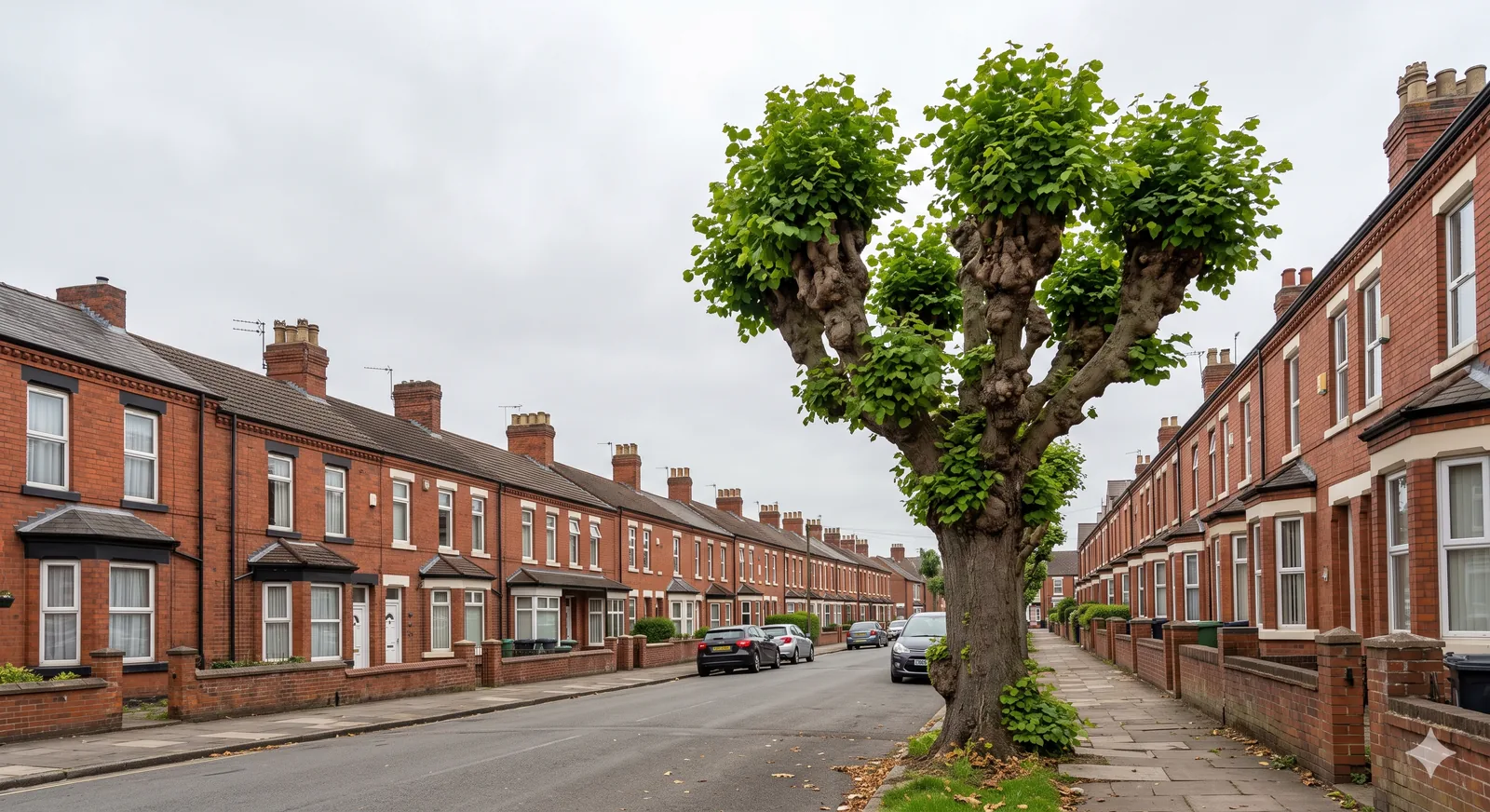
Cut all branches at a specific height above ground level, and something remarkable happens: the tree doesn't suffer. Instead, it builds a permanent structure—the pollard head—a distinctive knobby, callused mass where wound wood accumulates over years and decades. New shoots emerge from this head each growing season, producing dense foliage that can be harvested repeatedly without damaging the tree's core. Set the pollard head at 6–15 feet above ground: high enough to keep livestock from browsing the tender new shoots, low enough to manage with basic equipment.
The biology underneath is clever. Pollarding keeps trees in a partially juvenile state, reducing the weight and windage of the canopy while stimulating vigorous regrowth from dormant buds at the cut points. Over decades, the pollard head develops a mushroom shape as successive cuts build callused tissue. This repeated wounding—when done right—doesn't weaken the tree. It extends lifespan by preventing the structural failures that plague large, mature specimens.
Medieval records reveal how deeply embedded pollarding was in European land management. Communities marked parish boundaries with pollards. Commoners harvested wood from shared land without depleting the resource. Many pollards planted in the 1500s–1700s survive today, still productive, still generating value.
How is pollarding different from coppicing and topping?
The key difference between pollarding and coppicing comes down to height. Coppicing cuts at or below ground level, leaving no visible trunk. Pollarding cuts at 6–15 feet, creating a permanent elevated head. Coppiced trees regrow faster because ground-level stumps reach soil moisture more efficiently. Pollarded trees protect new shoots from browsing—a critical advantage when livestock or deer are present. Both produce renewable timber without killing the tree, but they suit different landscapes.
Topping is something else entirely. It's indiscriminate branch removal with no plan for future management. Topped trees suffer from decay at cut sites, weakened branch attachments, and shortened lifespans. Pollarding is intentional, cyclical, strategic. Topping is a one-time wound that leaves trees compromised. The Royal Horticultural Society and professional arboricultural bodies across the UK consistently condemn topping while endorsing pollarding—a critical distinction that confused homeowners often miss.
Why Do Arborists and Gardeners Use Pollarding on Trees?
Urban planners face a genuine constraint: mature trees drop branches on power lines, obstruct streetlights, or crack property foundations. Pollarding solves this by controlling tree size while retaining the aesthetic and environmental benefits of an established specimen. In cities across Britain, plane trees and limes are routinely pollarded to maintain compact crowns. The technique also reduces branch failure risk during storms by limiting canopy weight and wind resistance—a genuine safety advantage in populated areas.
Rural use persists for reasons rooted in economics. Willows on a 1–3 year cycle produce slender rods for basketry and hurdle-making. Ash, oak, and hazel on 8–15 year cycles yield poles for fencing and firewood. Pollarding delivers renewable timber without felling entire trees, without the carbon cost of replanting, without habitat disruption. A single pollarded tree sequestered carbon and supports wildlife for centuries.
Heritage and design also drive pollarding. Pleached pollards create formal hedges and screening in estates. The architectural silhouette—especially visible in winter when branches are bare—adds structure to a landscape. Some heritage sites maintain historic pollards to preserve how their ancestors managed land.
What are the main reasons to pollard a tree?
- Space management: Constrained gardens, streets, and parks require smaller crowns. Pollarding delivers that without removing the tree entirely.
- Storm safety: Reduced branch weight and windage mean fewer failures during high winds, a real concern near buildings or traffic.
- Renewable harvest: Timber, poles, fodder appear on a predictable cycle—without killing the source.
- Ornamental value: Formal shapes, architectural silhouettes, heritage preservation.
- Extended lifespan: Maintaining trees in a partially juvenile state often extends their productive life well beyond typical maturity.
Which Tree Species Are Best Suited for Pollarding?
Not every tree survives pollarding. Willows, London plane, limes, ash, hazel, hornbeam, and oak share one critical trait: vigorous regrowth from dormant buds after severe pruning. Cut back to the pollard head, and they produce multiple new shoots each season, rebuilding canopy without long-term decline. Species lacking this capacity—most conifers, cherries, and many ornamentals—respond poorly or die. Choose the wrong species, and pollarding fails.
Climate and soil matter. Pollarding works best in temperate zones with distinct dormant seasons, where winter cold triggers dormancy and spring release new growth energy. UK conditions suit species hardy to USDA zones 5–8. Soil type determines species selection too: willows tolerate wet, heavy soils; ash and oak prefer well-drained ground. Pollard a drought-sensitive species on a dry site, and stress compromises regrowth vigour.
British urban forestry programmes rely on three species most heavily. London plane (*Platanus × acerifolia*) tolerates pollution and compacted soils while responding vigorously to annual or biennial cutting. Hornbeam (*Carpinus betulus*) produces the dense, twiggy growth ideal for pleaching in formal gardens. Limes (*Tilia* species) control the aphid infestations that create honeydew drip on parked cars below—a practical urban benefit. According to the Arboricultural Association, these three account for the majority of pollarded street trees in UK towns.
What trees can be pollarded successfully?
| Species | Typical Pollarding Cycle | Best Use | UK Suitability |
|---|---|---|---|
| Willow (Salix spp.) | 1–3 years | Basketry rods, biomass, wildlife habitat | Excellent; tolerates wet soils |
| London plane (Platanus × acerifolia) | 2–5 years | Urban street trees, pollution tolerance | Excellent; widely used in cities |
| Lime (Tilia cordata, T. × europaea) | 2–6 years | Street trees, formal avenues, aphid control | Excellent; traditional choice |
| Ash (Fraxinus excelsior) | 8–15 years | Poles, tool handles, firewood | Good; declining due to ash dieback |
| Hornbeam (Carpinus betulus) | 2–5 years | Pleached hedges, formal gardens | Excellent; native, hardy |
| Oak (Quercus robur, Q. petraea) | 10–15 years | Timber poles, heritage landscapes | Good; slow regrowth |
| Hazel (Corylus avellana) | 6–10 years | Fencing stakes, hurdles, heritage woodland | Excellent; native, versatile |
The Step-by-Step Process: How to Pollard a Tree Correctly
Begin with young trees—5 to 10 years old, before trunk diameter reaches 4 inches and individual branches exceed 2–4 inches. Delay this decision too long, and the wounds become enormous, healing poorly and risking decay. Choose your height: 6–8 feet for accessibility in gardens, higher for street trees where you need clearance for traffic. In late winter (January–March in the UK), before sap rises, make clean cuts just above a node or bud cluster. Remove all branches at that height in a single session to establish the pollard head. The tree responds by producing multiple shoots from dormant buds. Allow one full growing season for these shoots to establish the pollard head structure.
Maintenance follows a rhythm set by species and what you're growing it for. On ornamental pollards and street trees, remove all new growth each late winter—cutting flush to the pollard head without leaving stubs, which invite decay. Sharp bypass secateurs handle shoots up to 1 cm; loppers manage growth up to 3 cm; a pruning saw takes thicker wood. Cut at an angle so water runs off the pollard head. Avoid tearing bark or ragged edges. Over time, wound wood accumulates and forms the characteristic knobby callus that defines a mature pollard.
For timber or fodder, extend the cycle to match your harvest goal: willows for basketry on a 1–3 year cycle, ash or hazel for poles on an 8–15 year cycle. Longer cycles produce thicker stems but hit harder when you cut—trees on 10+ year cycles need close watching for decay at cut sites. Never stop mid-cycle. If you abandon pollarding, the pollard head produces heavy, weakly attached branches that can fail without warning. A tree pollarded for decades cannot safely revert to natural growth without professional assessment and gradual structural pruning.
How often should you pollard a tree?
Frequency depends on what the tree is for. Ornamental street trees and garden specimens get cut annually (every 1–2 years) to keep crowns compact and shoots from running wild. Willows for basketry or biomass need annual or biennial cutting to produce slender, flexible rods. Hardwoods like ash, oak, and hazel grown for poles go longer—every 8–15 years—so stems thicken enough for fencing and construction work.
Once you start, you can't stop. Skip a scheduled cut and shoots grow too large, loading weight on the pollard head and raising failure risk. Miss 3–5 years and the accumulated growth becomes too heavy to remove safely in one session—you'll need gradual reduction over multiple years instead. This is why pollarding demands commitment. It's a long-term system, not a one-time fix.
What is the best time of year to pollard a tree?
Late winter—January to March in the UK—is optimal for most species, whilst the tree sleeps before sap rises and new growth starts. Cutting during dormancy means less stress, less sap bleeding, and faster regrowth once spring arrives. Avoid the growing season (April–September): cutting then disrupts photosynthesis and drains energy reserves. Late autumn (October–December) is risky too; fresh wounds may not callus before winter frosts set in.
Some species break the rule. Walnuts and birches bleed heavily if cut in winter, so July–August works better and reduces pest attraction. Plane trees, ash, and oak prefer mid-winter (December–February) to lower fungal infection risk at fresh wounds. For veteran trees or anything in a conservation area, ask a qualified arborist first.
What Are the Benefits and Drawbacks of Pollarding Trees?
A well-maintained pollard can live 200–400+ years, far longer than an unpruned tree. By keeping trees in a partially juvenile state and cutting weight from the canopy, you prevent the split trunks and broken crowns that often kill mature trees. Historic pollards from the 1600s and 1700s are still productive today. That long lifespan matters practically: if you're managing an estate or civic landscape, pollarding is one of the few ways to keep significant trees through multiple centuries. Storm damage risk also drops when you reduce windage and branch weight, making pollarded trees safer near buildings and roads.
You get renewable harvest without felling. A single pollarded willow produces several kilograms of rods annually for decades; pollarded ash or hazel yields poles on 10–15 year cycles. The same tree gives you multiple harvests over its lifetime whilst continuously sequestering carbon and producing low-impact materials. Dense regrowth provides nesting habitat for birds, and the decaying pollard head hosts invertebrates and fungi—real biodiversity benefit.
The catch is commitment. You cannot stop pollarding once started without creating hazardous, weakly attached branches; you're signing up for annual or cyclical maintenance for the tree's life. Bad technique—inconsistent heights, stubs left behind, blunt tools—invites decay and undermines the pollard head. Fresh wounds attract wood-boring beetles. A pollarded tree in poor health may fail to regenerate, leaving a dead stump. And starting wrong matters: pollarding a mature tree or choosing an unsuitable species causes damage you cannot undo.
"Well-maintained pollards can live 200–400+ years, far beyond the typical lifespan of unpruned specimens—making pollarding one of the most effective techniques for extending tree life in managed landscapes."
Is pollarding good for trees or does it harm them?
Done right, pollarding benefits trees. It extends lifespan, cuts structural failure risk, and keeps trees productive for centuries. Trees naturally tolerate herbivory and storm damage by regenerating from dormant buds; pollarding harnesses this capacity in a controlled way.
Done wrong, it causes serious harm. Starting on a mature tree with thick branches creates wounds that never fully seal, letting decay fungi into the heartwood. Skip years or vary your cut height and you get weakly attached branches prone to snapping. Wound dressings and sealants—once standard—now prove to trap moisture and accelerate decay. If you're uncertain, bring in a qualified arborist before touching a valuable or protected tree.
Pollarding vs. Other Tree Management Techniques: A Practical Comparison
Pollarding and coppicing both aim for renewable harvest but work at different heights. Coppicing cuts at or below ground level, sprouting multiple shoots from the stump or root collar. Growth from coppice stools happens faster and more vigorously because ground-level cuts reach soil moisture and nutrients more easily. It suits woodland and hedgerow work where you can fence out livestock. Pollarding lifts the cut point well above ground—that protects new shoots from browsing and creates the distinctive knobby silhouette you see in grazed pastures and urban parks.
Crown reduction is selective pruning that shortens individual branches back to lateral growth points, keeping the tree's natural shape intact. Unlike pollarding, which removes all growth at a fixed height, crown reduction preserves branch taper and structure. It works for mature trees that have never been pollarded and just need size control. The trade-off: it demands more skill, takes longer, and avoids the permanent commitment and architectural look of a pollard head.
Topping—hacking off large branches without regard for structure—is universally condemned by professional arborists. Topped trees decay, grow weak, and die young. Homeowners often confuse topping with pollarding, but they're opposite approaches: pollarding is deliberate and cyclical with fixed cut points and long-term management; topping is a one-time brutal cut that leaves trees permanently damaged.
When should you use pollarding instead of other pruning methods?
Pollarding suits situations where you need long-term size control in tight space and can commit to annual or cyclical work. Street trees, garden specimens near buildings, trees in small urban plots—these are ideal. It's also the right choice if you want to harvest renewable timber or biomass without felling, or if you need a formal, architectural look in designed landscapes.
Crown reduction makes sense instead if the tree is mature, has never been pollarded, and you want to reduce size whilst preserving its natural form. That's a one-time or occasional intervention for modest size control without permanent reshaping. Coppicing belongs in woodland or hedgerow settings where ground-level cutting works and livestock are fenced out. Topping? Never. It has no place in tree care.
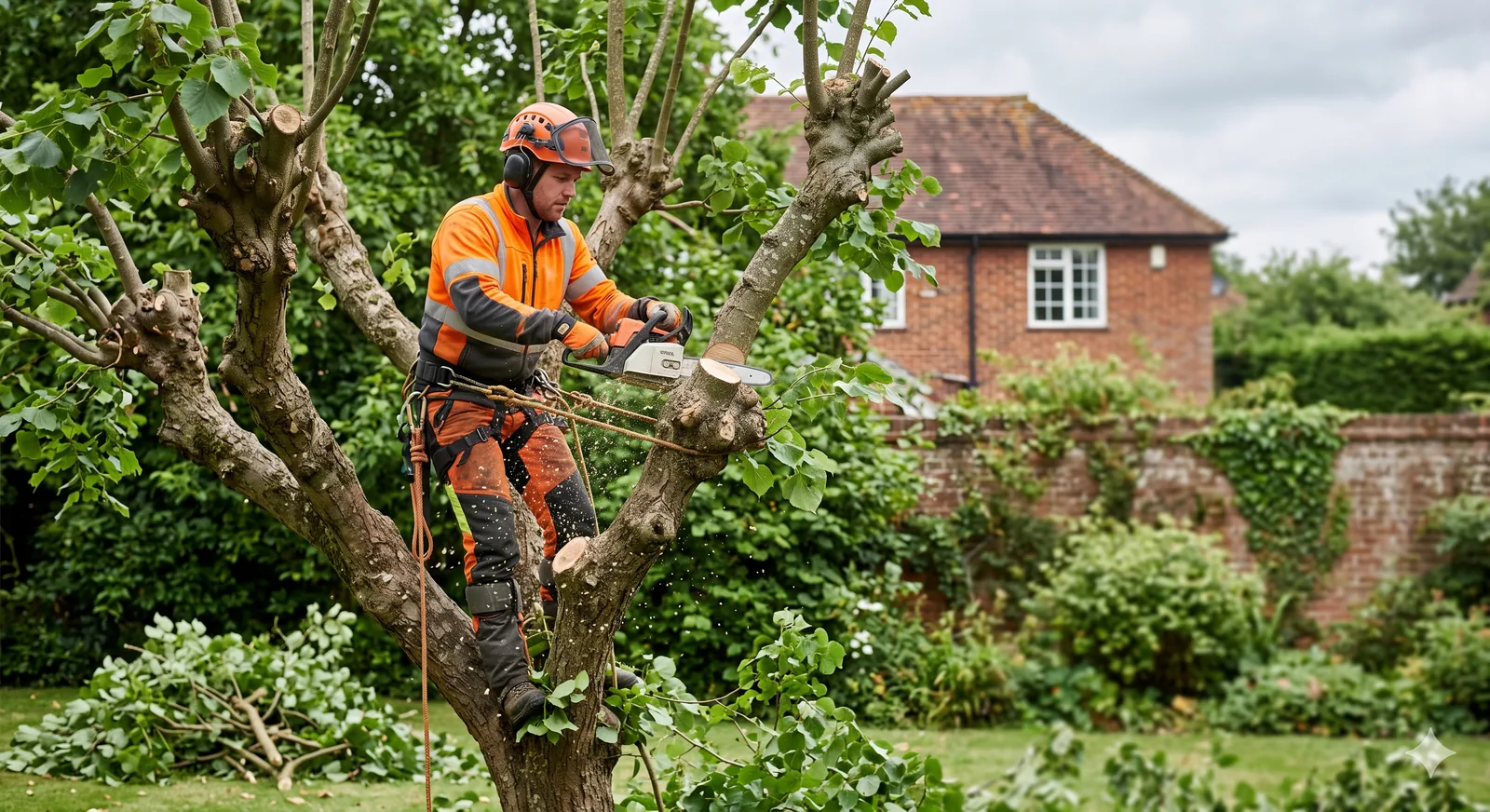
Need pollarding done properly?
Find a qualified local tree surgeon
Pollarding done wrong can ruin a tree. We connect UK homeowners with vetted, experienced arborists in their area.
This article is published by an independent tree surgery practice for informational purposes only and does not represent or claim affiliation with any government body, professional association, or official authority.
Frequently Asked Questions About Pollarding
Can you pollard any tree?
No. Species selection is critical. Willows, plane trees, limes, ash, hazel, hornbeam, and oak regenerate vigorously from dormant buds after severe cutting. Conifers, cherries, birches, and most ornamental species lack that capacity and may die or produce nothing after pollarding. Confirm your species is suitable before you cut, or ask a qualified arborist.
Does pollarding hurt the tree?
Done right, pollarding doesn't harm trees—it actually extends their lifespan and keeps them healthy, provided you start young, stay consistent, and use sharp tools during dormancy. But mess it up (waiting until the tree is mature, skipping years, leaving stubs, or using dull equipment), and you'll stress the tree, invite decay, and shorten its life dramatically. One crucial mistake many people make: applying wound dressing. It seems protective, but it does the opposite—traps moisture and speeds up rot.
How long do pollarded trees live?
A well-maintained pollard can reach 200–400+ years. That's substantially longer than the same species left unpruned. Walk through UK landscapes today and you'll find living pollards planted in the 1600s and 1700s still producing shoots. Of course, how long yours lasts depends on which species you choose, whether you actually stick to the cutting schedule, the tree's condition when you start, and what the soil and site are like—neglected pollards on poor ground won't make it as far.
Can you stop pollarding a tree?
Don't. Once you've established a pollard head, those shoots grow back vigorously but weakly attached. Skip a cutting cycle and those branches gain weight fast—then they fail. If you've been pollarding for decades, you can't simply abandon it and expect the tree to go back to normal. Reverting a long-established pollard takes years of gradual structural pruning under professional guidance. Pollarding demands commitment for life.
Is pollarding expensive?
Annual upkeep runs modest if the tree's easy to reach: expect £80–£150 per session with a qualified tree surgeon, though size and access push that higher. Setting up a new pollard or working on large, awkward specimens costs more—£200–£500+. If you're handy and the tree is under 8 feet and accessible, DIY maintenance on established pollards saves money. But get it wrong and you've wasted the investment—professionals are worth the cost if you're uncertain about technique.